
Goalkeeper · Zimbabwe · born 1957
Career by season, honours, the Warriors record and the reported net worth, with the current club and this season's numbers in the modules.
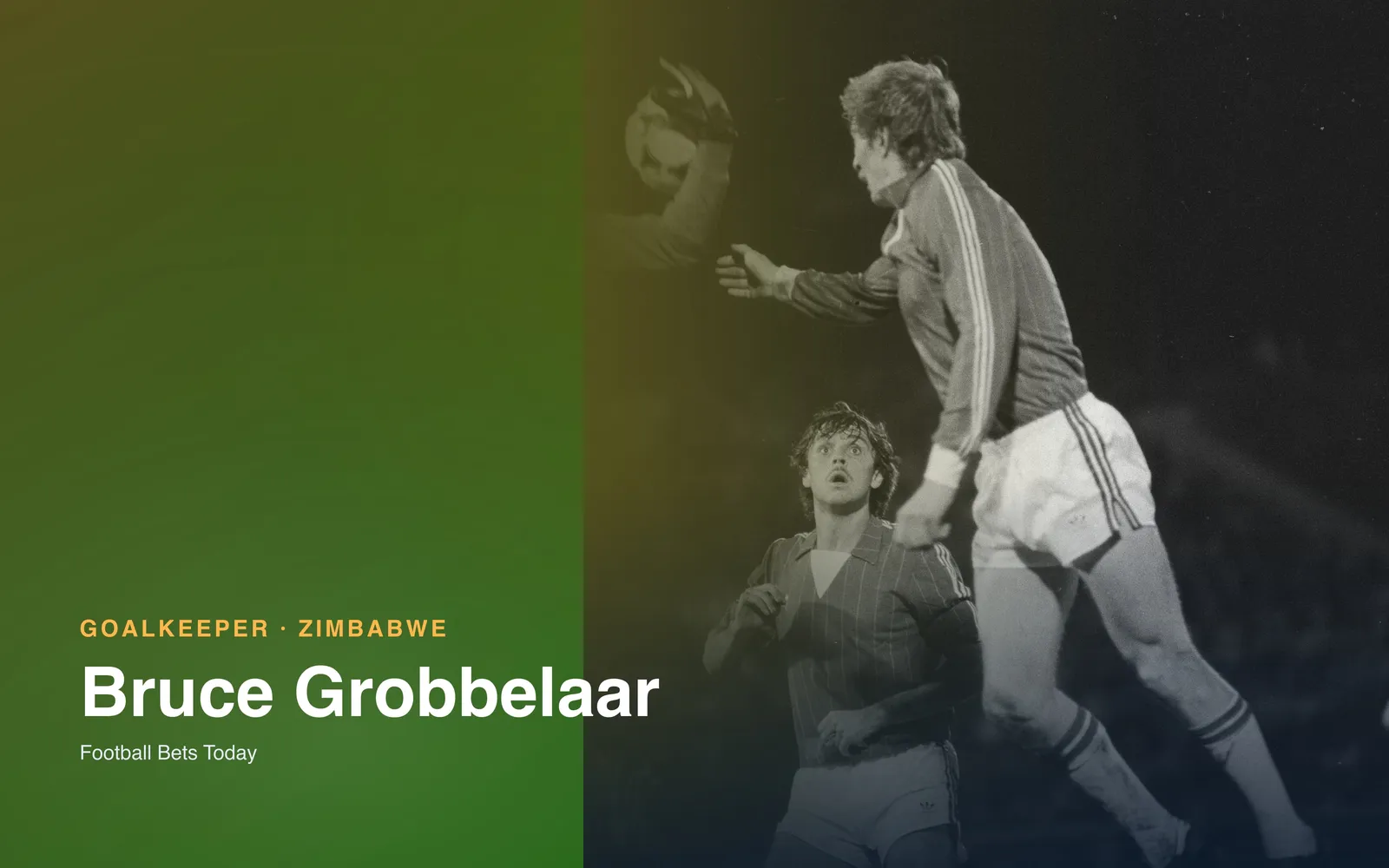
Career
Clubs by season
| Club | From | To | Apps | Goals | Note |
|---|---|---|---|---|---|
| Highlanders | 1973 | 1974 | 2 | 0 | permanent |
| Chibuku Shumba (Black Aces) | 1975 | 1975 | 13 | 0 | permanent |
| Highlands Park | 1976 | 1976 | 0 | 0 | permanent |
| Durban City | 1977 | 1978 | 23 | 0 | permanent |
| Vancouver Whitecaps | 1979 | 1981 | 24 | 0 | permanent |
| Crewe Alexandra | 1979 | 1980 | 24 | 1 | loan |
| Liverpool | 1981 | 1994 | 440 | 0 | permanent |
| Stoke City | 1993 | 1993 | 4 | 0 | loan |
| Southampton | 1994 | 1996 | 32 | 0 | permanent |
| Plymouth Argyle | 1996 | 1997 | 36 | 0 | permanent |
| Oxford United | 1997 | 1997 | 0 | 0 | permanent |
| Sheffield Wednesday | 1997 | 1997 | 0 | 0 | permanent |
| Oldham Athletic | 1997 | 1998 | 4 | 0 | permanent |
| Chesham United | 1998 | 1998 | 4 | 0 | permanent |
| Bury | 1998 | 1998 | 1 | 0 | permanent |
| Lincoln City | 1998 | 1998 | 2 | 0 | permanent |
| Northwich Victoria | 1999 | 1999 | 1 | 0 | permanent |
| Hellenic | 2002 | 2002 | 1 | 0 | permanent |
| Glasshoughton Welfare | 2007 | 2007 | 1 | 0 | permanent |
Appearances and goals are to the end of the last completed season; this season's numbers load from the feed.
Warriors
Debut 1977 · 33 caps · 0 goals (to 1998)
Honours
- Football League First Division 1981-82, 1982-83, 1983-84, 1985-86, 1987-88, 1989-90 · Liverpool
- European Cup 1983-84 · Liverpool
- FA Cup 1985-86, 1988-89, 1991-92 · Liverpool
- Football League Cup 1981-82, 1982-83, 1983-84 · Liverpool
- FA Charity Shield 1982, 1986, 1988, 1989, 1990 · Liverpool
- Football League Super Cup 1986 · Liverpool
- NASL Indoor All-Stars, All-North Team 1980-81
Reported net worth
USD 1 million to 5 million (Sports Brief, 2023)
Published estimates, not accounts. The figure carries its publisher and year.
In depth
About Bruce Grobbelaar
Key takeaways
- Bruce Grobbelaar is a retired Zimbabwean goalkeeper, born in Durban on 6 October 1957.
- His 628 Liverpool appearances comprise 440 league appearances and 188 in other competitions.
- Wikipedia gives 32 Zimbabwe caps in its text and 33 in its infobox.
- The Irish Times reported a Liverpool salary of approximately £160,000 a year in 1997.
- Liverpool’s £250,000 payment in March 1981 was a transfer fee; neither that payment nor the reported salary establishes his net worth.
Bruce Grobbelaar is a retired Zimbabwean football goalkeeper who played for Liverpool from 1981 to 1994, and he has no active professional club. Born in Durban on 6 October 1957 and raised in Rhodesia, now Zimbabwe, he became one of African soccer’s defining European champions.
For supporters of Zimbabwe, his story connects the Warriors with a Liverpool career remembered far beyond Anfield. The useful details need separating: league appearances from total appearances, a transfer fee from wages, and a reported salary from a personal wealth valuation.
Who Is Bruce Grobbelaar?
Bruce David Grobbelaar is a Zimbabwe international goalkeeper whose sporting identity spans southern Africa and Liverpool. His birthplace was Durban, his upbringing was in Rhodesia, and Zimbabwe became his international home after independence. That distinction matters for South African readers recognising a local birthplace and Zimbabwean families recognising their national goalkeeper. Before establishing his professional career, he served eleven months in the Rhodesia Regiment during the Rhodesian Bush War, a brief but significant part of his early biography.
His place among African footballers rests on sustained achievement as well as one unforgettable European final. The Liverpool years brought six league championships, while the 1984 European Cup gave an African goalkeeper a landmark place in the competition. For readers whose Anfield memories begin with Mohamed Salah or Sadio Mane, Grobbelaar provides an earlier chapter. His Zimbabwe connection also gives that history a different geographical centre from the African Liverpool stories most often discussed.
Birthplace, upbringing and international representation answer separate questions about a footballer. Reading them together preserves the southern African breadth of Grobbelaar’s biography without making his Durban origins and Zimbabwe identity compete. It also gives readers a useful way to approach other African careers that cross borders: establish where the player grew up, which national side he represented and where his club career developed.
The Road From Southern Africa: Clubs and Reported Fee
Grobbelaar’s route to Liverpool ran through southern African clubs, North America and a loan at Crewe Alexandra. His career connects Zimbabwe and South Africa with the North American and English games. The timeline below follows his principal playing spells.
Vancouver Whitecaps brought him into the North American Soccer League in 1979 after a scouting camp in South Africa. His Crewe loan during the 1979 to 1980 season supplied the English breakthrough: 24 league appearances and his only professional goal, scored from a penalty. Liverpool then paid £250,000 for him in March 1981.
The Liverpool spell lasted until 1994, with a Stoke City loan in 1993 before his Southampton move. Plymouth Argyle followed in 1996, then several lower league clubs. A club registration and a league appearance describe different things: joining a club does not necessarily mean playing a league match for it.
The overlapping dates are useful rather than contradictory. A loan places a player temporarily with another team while his longer club spell continues, which explains Crewe appearing within the Vancouver years and Stoke within the Liverpool years. For African readers tracing his journey, those distinctions show how the move towards English football developed through several stages rather than one direct transfer from southern Africa.
Coaching overlapped with the later playing years. Grobbelaar served briefly as Zimbabwe’s player manager in 1997 and 1998, then coached SuperSport United from 1999 to 2001 and Hellenic from 2001 to 2002. He later worked as Ottawa Fury’s goalkeeping coach from 2014 to 2018 and with Matabeleland in 2018. Ottawa was a specialist coaching role, rather than the head coach position sometimes implied by shortened career summaries.
| Years | Club | Move or spell |
|---|---|---|
| 1979 to 1981 | Vancouver Whitecaps | Permanent move |
| 1979 to 1980 | Crewe Alexandra | Loan spell |
| 1981 to 1994 | Liverpool | £250,000 transfer fee in March 1981 |
| 1993 | Stoke City | Loan from Liverpool |
| 1994 to 1996 | Southampton | Permanent move |
| 1996 to 1997 | Plymouth Argyle | Permanent move |
What Did Grobbelaar Do on the Pitch?
Grobbelaar was an athletic goalkeeper remembered for reflex saves, adventurous movement and the confidence to make himself conspicuous under pressure. His reputation can become dominated by the entertainment, but Liverpool’s appearance record supplies the necessary balance. Across his completed Liverpool career, ending after the 1993 to 1994 season, he made 628 appearances in all competitions. Of those, 440 were league appearances and 188 came in other competitions. Those figures describe different scopes, rather than competing accounts of his career.
His defining performance came against Roma in the 1984 European Cup final, which Liverpool won 4 to 2 on penalties. Grobbelaar became the first African to appear in and win a European Cup final. During the shootout, his exaggerated, wobbling legs became the enduring image. A goalkeeper cannot dictate where every penalty travels, but he can make the moment feel different for the taker. Grobbelaar made his presence part of a contest usually described through the players taking the kicks.
A full match offers a better way to assess that style than a collection of saves. Watch his starting position before a pass, his decision to come towards a cross and how he resets after Liverpool lose possession. Those moments help explain the goalkeeper’s relationship with the defenders. For African supporters exploring his legacy, the penalty routine becomes one part of a wider discussion about anticipation, movement and responsibility.
Across his Liverpool spell from 1981 to 1994, Grobbelaar won six league championships, three FA Cups and three League Cups. The European Cup belongs to the 1983 to 1984 season. Reading the honours alongside the appearances gives a fuller picture than treating the Roma shootout as an isolated moment of theatre.
Grobbelaar and Zimbabwe: Debut, Caps and the Warriors
Grobbelaar first played international football for Rhodesia in 1977, before representing Zimbabwe between 1980 and 1998. Wikipedia gives 32 Zimbabwe caps in its text and 33 in its infobox. The two totals differ, so both are presented with their attribution.
A cap counts an international appearance, rather than a call into a squad or a year spent available for selection. The Rhodesia appearance in 1977 therefore needs its own label when reading his record. Adding it to a Zimbabwe total without explaining the distinction would blur two different parts of his international biography and would not resolve the discrepancy between the published Zimbabwe figures.
The Warriors connection also changes how his career can be understood. Liverpool honours describe his achievements in club football; his Zimbabwe appearances identify the national team he represented alongside that career. Neither record substitutes for the other. For readers in Nigeria, Kenya, South Africa, Ghana and Uganda, keeping both in view gives an African international career the same attention as the celebrated European chapter.
Bruce Grobbelaar net worth
The Irish Times reported in 1997 that Grobbelaar’s Liverpool salary was approximately £160,000 a year. This is a historical salary figure, rather than a valuation of his personal wealth. A net worth estimate would need evidence about assets, debts and retained earnings, rather than a calculation from medals or years in football.
Separately, Liverpool paid a £250,000 transfer fee in March 1981. The payment secured his move between clubs. Read the two attributed figures as different measures: £160,000 describes reported annual pay, while £250,000 describes a transfer payment. Neither establishes his net worth. Converting either historical sum into today’s naira, shillings, rand or cedis would introduce an exchange date without establishing his wealth.
The date of a report also needs separating from the period it describes. A salary mentioned in a 1997 article should not automatically be read as earnings received in 1997, particularly when his Liverpool playing spell ended in 1994. Nor can one annual figure be multiplied across his entire career without evidence that his pay remained the same. The supported financial picture is limited to the attributed historical amounts.
How to Watch Grobbelaar From Nigeria, Kenya, South Africa, Ghana and Uganda
Grobbelaar is retired, so watching him means archive matches, interviews or an advertised appearance rather than a regular professional fixture. The 1984 European Cup final is the best starting point for understanding his reputation, followed by footage showing his ordinary goalkeeping work across a full match. Availability varies by country and service. Check the viewing information attached to any programme or event, particularly when a short clip and a complete archive broadcast have different availability.
Readers in Lagos and other Nigerian cities should use WAT, while Nairobi and Kampala use EAT, Johannesburg uses SAST, and Accra uses GMT. For illustration, a programme advertised for 19:00 GMT corresponds to 20:00 WAT, 21:00 SAST and 22:00 EAT. Those are time conversions, not an announced broadcast. For a dated interview, documentary screening or public appearance, check the event’s own date and displayed time zone before arranging your evening around it.
South African viewers have a direct route into the story through his Durban birthplace in 1957 and his SuperSport United coaching spell from 1999 to 2001. Zimbabwean supporters have the Warriors years alongside that club history. For Liverpool followers across Nigeria, Kenya, Ghana and Uganda, the useful viewing question is what the full match reveals beyond the famous penalty routine. Start with the dated archive listing, confirm access in your country, then choose the complete match where it is available.
FAQ
What is Bruce Grobbelaar's net worth?
The Irish Times reported a Liverpool salary of approximately £160,000 a year in 1997. That historical wage figure does not establish Bruce Grobbelaar’s net worth, which would require evidence about his assets, debts and retained earnings.
Which club does Bruce Grobbelaar play for?
Bruce Grobbelaar is retired and has no active professional club. He played for Liverpool from 1981 to 1994, followed by Southampton, Plymouth Argyle and several lower league clubs.
How many caps does Bruce Grobbelaar have?
Wikipedia gives 32 Zimbabwe caps in its text and 33 in its infobox, covering 1980 to 1998. He also represented Rhodesia in 1977, which should be distinguished from his Zimbabwe appearances.
How many trophies did Bruce Grobbelaar win with Liverpool?
During his Liverpool career from 1981 to 1994, Grobbelaar won six league championships, three FA Cups, three League Cups and the European Cup in 1984.
Written by Tunde Akinwande, 2026-11-11.