
Liverpool, England · opened 1884
Capacity 61,276. Who plays here, the matches it is known for, and how to get there.
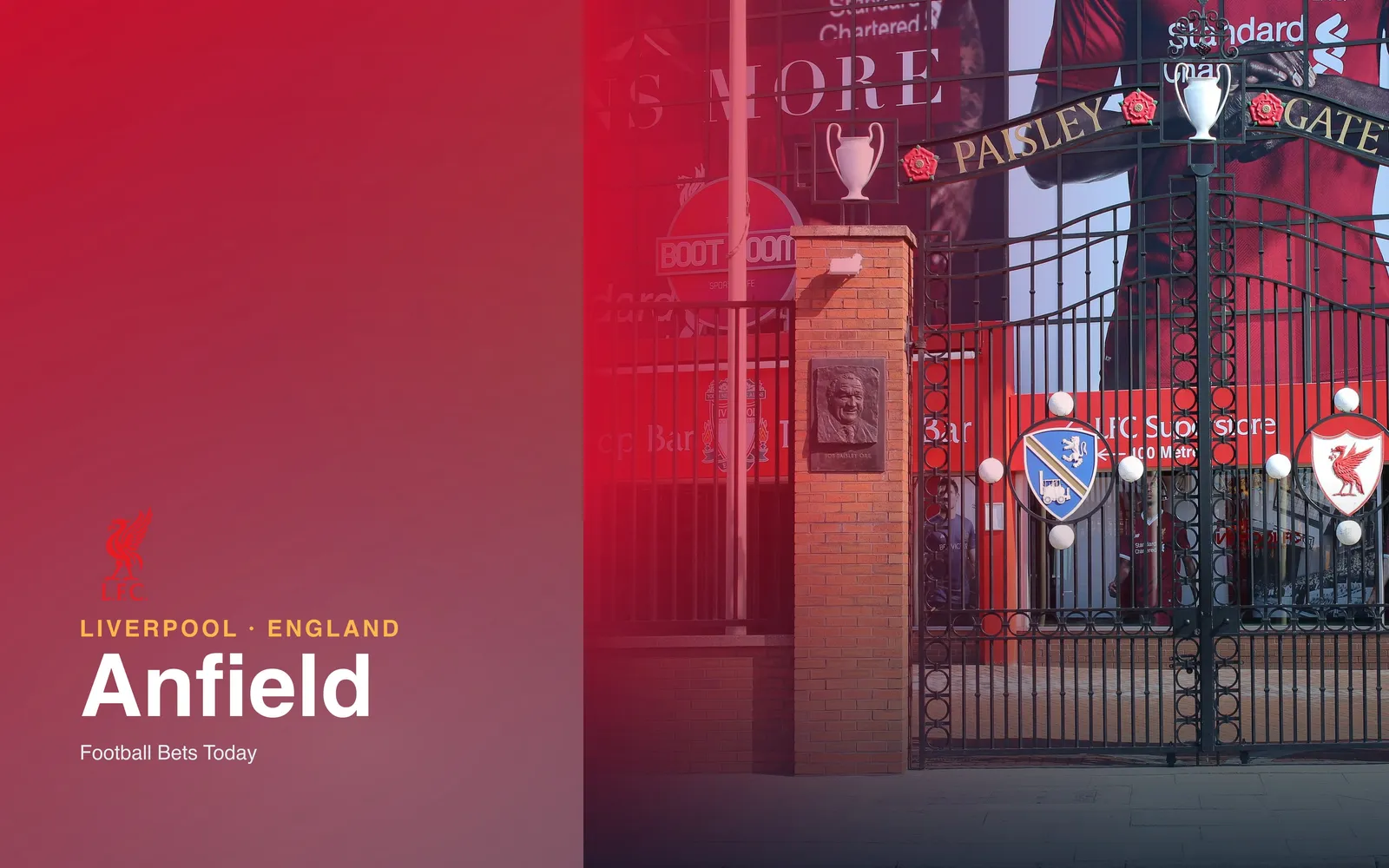
The ground
Facts
| Capacity | 61,276 |
|---|---|
| Opened | 1884 · renovated Main Stand rebuilt 2016; Anfield Road Stand expanded 2024 |
| Official name | Anfield (no sponsor name) |
| Surface | grass |
| Owner | Liverpool Football Club |
| Record attendance | 61,905 · Liverpool v Wolverhampton Wanderers, FA Cup fourth round (1952) |
| Getting there | No station next to the ground. Use buses from Liverpool city centre, or Kirkdale station and walk; on matchdays the roads around Walton Breck Road and Anfield Road are restricted. |
History
Matches it is known for
- Home of Everton, 1884–1891, before Liverpool
- Record crowd of 61,905 for Liverpool v Wolves, FA Cup, 2 February 1952
- European Cup/Champions League nights, including Liverpool 4–0 Barcelona, May 2019
- Main Stand rebuilt 2016
- Anfield Road Stand expansion, 2024
In depth
About Anfield
Key takeaways
- Liverpool have played at Anfield since 1892, following Everton's departure.
- The Main Stand redevelopment in 2016 and Anfield Road End expansion in 2024 increased the ground's capacity.
- The Kop takes its name from Spion Kop, the South African battlefield of 1900.
- Kirkdale station is about a mile from Anfield, so allow time to walk.
Anfield is Liverpool's football stadium in north Liverpool, with a capacity of 61,276 following the Anfield Road End expansion in 2024, making it the fifth largest in England. It has been home to Liverpool since 1892. Egypt's Mohamed Salah, Senegal's Sadio Mané and Guinea's Naby Keïta helped connect its modern history to African football. Supporters in Nigeria, Kenya, South Africa, Ghana and Uganda follow those connections; for South African readers who call the game soccer, the Kop also carries a name rooted in their country's history.
Everton played here before Liverpool existed, beginning a stadium history that stretches back to 1884. The ground later developed around the streets beside Stanley Park, while its most famous terrace took its name from a battle in South Africa. Among football stadiums, Anfield stands out for the relationship between its rebuilt stands and older landmarks. Its expansion dates explain the changing capacity, while the gates and memorial give visitors reasons to spend time outside the turnstiles.
How Did Anfield Reach Its Present Capacity?
Anfield reached its capacity through successive stand developments, with the Main Stand expanded in 2016 and the Anfield Road End enlarged in 2024. The redeveloped Main Stand opened on 9 September 2016 for Liverpool's four goals to one win over Leicester City, with the stadium capacity then given as 54,074.
Part of the expanded Anfield Road End opened for the Burnley match on 10 February 2024. The stadium fact sheet gives a capacity of 61,276. That figure describes the ground's capacity; the attendance at an individual match is a separate count and can be lower because of ticket allocations or operational arrangements.
The record crowd belongs to a different stadium era: 61,905 watched Liverpool face Wolverhampton Wanderers in 1952, when standing terraces accommodated spectators differently. The rebuilt Kop opened in 1994 with a capacity of 12,390. Comparing these figures requires attention to what each measures, especially when explaining Anfield's size to someone planning a first visit from Africa.
| Year | Attendance or Capacity | What Changed |
|---|---|---|
| 1952 | 61,905 attended | Record crowd against Wolverhampton Wanderers, with standing terraces. |
| 1994 | 12,390 in the rebuilt Kop | The rebuilt Kop replaced the standing terrace, completing the all seater ground. |
| 2016 | 54,074 seats | The redeveloped Main Stand opened. |
| 2024 | 61,276 | Part of the expanded Anfield Road End opened for the Burnley match on 10 February 2024. |
Who Played at Anfield Before Liverpool?
Everton played the first match at Anfield on 28 September 1884, beating Earlestown five goals to nil. They used the ground until 1892, when a disagreement over its tenancy preceded their move to Goodison Park. Liverpool were formed in 1892 and took over Anfield, establishing the association that defines the stadium today.
Liverpool's first match there was a friendly against Rotherham Town on 1 September 1892, which they won seven goals to one. These beginnings help explain the Merseyside rivalry for supporters in Nigeria, Ghana and elsewhere who encounter it through broadcasts: the clubs' histories share a ground as well as a city. Anfield was already an established football venue before Liverpool began playing there.
Why Is the Kop Connected to South Africa?
The Kop's name refers to Spion Kop, the hill associated with a battle in January 1900 during the South African War. Many British soldiers killed there came from the Lancashire region. The name was applied to Anfield's large terrace in 1906, giving the ground a connection to South African history that predates its African players.
A redevelopment in 1928 added a roof and increased the Kop's standing capacity to about 30,000. Its scale helped make the terrace central to Anfield's singing culture. The 1994 seated rebuild changed its physical arrangement, while the Kop name continued. For South African supporters, understanding the battlefield reference adds historical meaning to a word often heard simply as a label for Liverpool's supporters.
What Do the Gates and Memorial Represent?
The Shankly Gates were unveiled in 1982 in memory of Bill Shankly, whose period as Liverpool manager ran from 1959 to 1974. Their inscription connects a physical stadium landmark with the song associated with Liverpool supporters. The gates are a recognisable stop for visitors approaching the ground.
The Hillsborough memorial commemorates the 97 people who died as a result of the disaster at the 1989 FA Cup semi final in Sheffield. It moved to a position beside the Main Stand in 2016 as part of that redevelopment. Visitors travelling from Africa should allow quiet time here, recognising that the memorial is a place of remembrance with lasting importance to families and supporters.
Which Internationals Has Anfield Hosted?
Anfield hosted England against Ireland in 1889, showing that its international role began before Liverpool's formation. During Euro 1996 it staged three group matches and the quarter final between France and the Netherlands. That tournament brought national teams and visiting supporters into a stadium usually associated with club football.
The most recent senior men's international at Anfield was Wales against Paraguay on 1 March 2006, a goalless friendly. These fixtures sit alongside its domestic history, rather than changing its identity as Liverpool's home. For African readers familiar with players moving between national teams and European clubs, they also show how one venue can serve several football settings.
Why Did Liverpool Stay at Anfield?
A proposed stadium in neighbouring Stanley Park received planning permission in 2004. The project would have moved Liverpool into a new ground, but it was not built. The club instead pursued expansion at Anfield, with the Main Stand development opening in 2016 and further Anfield Road End capacity following in 2024.
Staying preserved the geographical setting familiar from generations of photographs and broadcasts. The result combines larger stands with established streets and landmarks. For supporters organising a visit from Kenya or Uganda, that matters practically: Anfield remains a neighbourhood ground, so journeys need to account for walking routes and crowds around residential roads.
How Do African Supporters Follow Liverpool?
Salah and Mané were part of Liverpool's Champions League winning side in 2019, alongside Keïta and Cameroon's Joël Matip. All four also belonged to the squad that won the English league title in 2020. Their contributions give African supporters specific achievements to connect with Anfield, beyond a general interest in English football.
Readers in Nigeria, Kenya, South Africa, Ghana and Uganda can watch through television or streaming services carrying the relevant competition in their country, either at home or at shared viewing venues. Availability depends on territory and competition, so check the local listing for each match.
For a 15:00 GMT kick off, the corresponding times are 16:00 WAT in Nigeria, 18:00 EAT in Kenya and Uganda, 17:00 SAST in South Africa and 15:00 GMT in Ghana. Britain uses summer time for part of the year, so an advertised UK time needs its date and time zone checked before conversion.
FAQ
What is Anfield's capacity?
Anfield's capacity is 61,276 following the Anfield Road End expansion in 2024. It is the fifth largest football stadium in England. Its record attendance of 61,905 dates to 1952 and belongs to the standing terrace era.
Who played the first match at Anfield?
Everton played the first match at Anfield, beating Earlestown five goals to nil on 28 September 1884. Liverpool began playing at the ground in 1892.
Why is Anfield's Kop called the Kop?
The name comes from Spion Kop, the South African battlefield of 1900. It was applied to Anfield's terrace in 1906, reflecting the Lancashire connection of many soldiers killed in the battle.
How do you reach Anfield by train?
Kirkdale station is about 1 mile or 1.6 km from Anfield, while Liverpool Lime Street is about 2 miles or 3 km away. Allow additional time for the walk and matchday crowds, and check transport timetables before travelling.
Written by Tunde Akinwande, 2026-11-11.