
Glasgow (Parkhead), Scotland · opened 1892
Capacity 60,411. Who plays here, the matches it is known for, and how to get there.
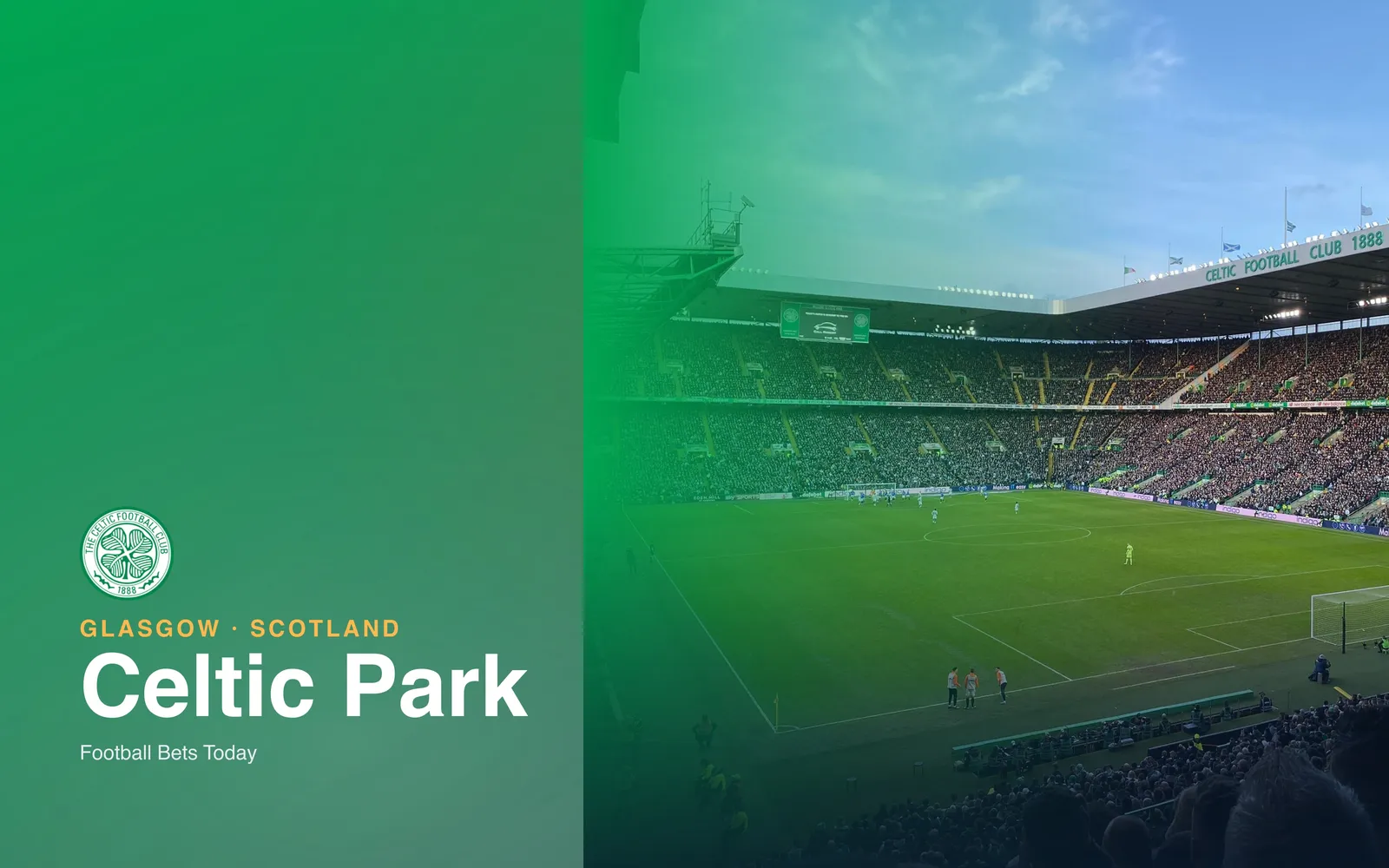
The ground
Facts
| Capacity | 60,411 |
|---|---|
| Opened | 1892 · renovated Main Stand 1929; roof replaced 1971; facade rebuilt 1988; phased rebuild 1994–98; rail-seating section 2016 |
| Official name | Celtic Park (no sponsor name). Current site used since 1892; the original Celtic Park opened in 1888. |
| Surface | hybrid |
| Owner | Celtic (since 1897) |
| Record attendance | 83,500 · Celtic v Rangers, 1 January 1938 (some sources give 92,000) (1938) |
| Getting there | Dalmarnock station is about a 10-minute walk; buses serve the ground; it sits on London Road (A74) near the M74 and M8. |
History
Matches it is known for
- 1897 Track Cycling World Championships
- Scotland internationals and cup finals when Hampden Park was unavailable
- 2014 Commonwealth Games opening ceremony
- 2019 Pro14 final (first rugby union match at the ground)
- Concerts including The Who, U2 and Prince
In depth
About Celtic Park
Key takeaways
- Celtic Park in Glasgow is Scotland's largest football stadium, and the stadium data shows its current listed capacity.
- Celtic play their home matches at Celtic Park, which is also called Parkhead and Paradise.
- Dalmarnock station on the Argyle Line is about a ten minute walk from the ground.
- The current Celtic Park opened on 20 August 1892, and its phased rebuild finished in August 1998.
- The commonly recorded attendance peak is 83,500 for Celtic against Rangers on 1 January 1938.
Celtic Park is Celtic's football ground in Parkhead, east Glasgow. It is Scotland's largest football stadium, known to football and soccer supporters as Parkhead or Paradise.
For readers travelling from Africa, recognising those names is as useful as knowing which station to use. They all lead to the same ground, where the stand on your ticket matters more than the nickname on a sign. The ten minute walk from Dalmarnock, the 1892 opening and the Wanyama and Ambrose link to the 2012 win over Barcelona explain most of what a visitor needs.
What Is the Capacity of Celtic Park?
Celtic Park's listed capacity, shown in the stadium data, is the largest for a football stadium in Scotland. Published figures sometimes differ slightly because they describe different seating configurations or usable capacity. Treat that number as the stadium's overall size, rather than a promise about tickets available for a particular fixture. Event arrangements can affect which seats are offered, so the seating plan attached to your booking is the practical guide.
Who Plays at Celtic Park?
Celtic are the regular tenants, playing Scottish Premiership home fixtures and domestic cup ties here, alongside European matches when scheduled at the ground. The Old Firm meeting with Rangers carries particular weight, while Champions League nights give supporters across Africa another reason to follow the Hoops. Celtic play in Scotland's league system, so readers arriving through EPL coverage should look for Scottish fixtures rather than an English league listing.
Its calendar has extended beyond football to rugby, as the 2018 to 2019 Pro14 final showed, although that is an occasional use rather than its weekly purpose. Read the fixture module by competition and venue before making plans: a Celtic fixture does not automatically mean a match at Celtic Park, and an event at the stadium does not automatically mean football.
How Do I Get to Celtic Park From the Airport or City Centre?
Dalmarnock station on the Argyle Line is about a ten minute walk from Celtic Park. From Glasgow Central, follow signs to the low level platforms and check the departure board for a service calling at Dalmarnock. After leaving the station, follow the pedestrian route towards the stadium and then the entrance printed on your ticket.
From Glasgow Airport, take an airport bus towards the city centre, then continue through Glasgow Central for the train to Dalmarnock. A taxi directly to your accommodation or the stadium is another straightforward option if you have luggage. From Queen Street, either walk towards the ground or continue to Central for the rail route. Local buses also serve the London Road area; check the destination, stop and return service before boarding, because routes and event arrangements can change.
Why Are Parkhead and Paradise Both Used?
Parkhead is the district, while Paradise is the supporters' nickname for Celtic Park. Neither name identifies a separate stadium, which helps explain why searches for Celtic Park Glasgow return all of them. The current ground opened in 1892. For travel bookings and directions, use Celtic Park as the destination, then check the stand and entrance on your ticket.
Where in Glasgow Is Celtic Park?
Celtic Park stands on London Road in Parkhead, east of Glasgow city centre. London Road is the useful landmark when matching a map to your route, while Dalmarnock is the station name to remember. For a first visit, choose accommodation with a manageable return journey as well as an easy outward trip. Comparing football stadiums by location helps here: the distance from a central station often matters more to a visitor than the stadium's headline capacity.
Which Stand Should Visiting Supporters Look For?
The Lisbon Lions Stand, renamed in 2000, holds about 13,000 and includes the usual away supporter area. That does not mean the entire stand is allocated to visitors. Away allocations occupy a designated section, allowing separate entry arrangements, so travelling supporters should follow their ticket instructions rather than simply walking towards the nearest turnstiles.
The Main Stand, built in 1929, is the older part of the ground. The stands together make up the overall capacity, but precise section availability belongs on the event seating plan. Buy through the authorised ticket route for your fixture and check any purchase conditions before arranging travel. If you need accessible seating or assistance, confirm the entrance and facilities when booking.
When Did Celtic Park Open and How Was It Rebuilt?
The original Celtic Park opened in 1888, and the current site opened on 20 August 1892. The first ground stood at Springfield Road and London Road, close to its successor. A fire destroyed the north grandstand in May 1904, while the Main Stand built in 1929 became a lasting part of the stadium's shape. These dates explain why the club's first home and the opening of today's site appear separately in accounts of its history.
Floodlights were first used on 12 October 1959, adding another landmark before the major reconstruction of the modern era. The phased rebuild finished in August 1998 at a reported cost of about £40 million. The result brought the large surrounding stands into the form supporters recognise today, while retaining the older Main Stand. Paradise remained a nickname throughout these changes rather than becoming a replacement official stadium name.
| Year | Milestone |
|---|---|
| 1888 | Original Celtic Park opened. |
| 1892 | Current site opened on 20 August. |
| 1904 | Fire destroyed the north grandstand in May. |
| 1929 | Main Stand built. |
| 1959 | Floodlights first used on 12 October. |
| 1998 | Phased rebuild completed in August. |
What Are the Attendance Record and Matchday Atmosphere?
Celtic Park's commonly recorded attendance peak is 83,500 for the Old Firm match against Rangers on 1 January 1938. Some historical accounts give about 92,000, so the lower figure should be presented with that qualification. Neither figure describes the modern seating capacity. The contrast is a reminder that an attendance from the terrace era and the number of places available in the rebuilt stadium answer different questions.
The safe standing section added another way to experience the ground, with 2,975 rail seats installed in the Lisbon Lions Stand during the 2016 close season. Those places form part of the stadium's capacity, rather than an extra allocation above it. For a visitor, atmosphere also comes with practical choices: check the section you are buying, arrive with time to find the entrance, and agree a meeting point before the crowd leaves.
Which Major Events Has Celtic Park Hosted?
Celtic Park hosted the opening ceremony of the Glasgow Commonwealth Games in 2014 and the Pro14 final for the 2018 to 2019 season. Uganda, Ghana, Kenya, Nigeria and South Africa were among the Commonwealth nations that took part in those Games, so the ceremony had a strong African connection. The rugby final, between Leinster and Glasgow, was the ground's first rugby union match. The Commonwealth Games also affected football arrangements: Celtic played their 2014 Champions League qualifiers at Murrayfield. Checking the event type matters before interpreting a stadium listing.
What Are the Pitch and UK Stadium Comparisons?
Celtic Park's pitch measures 114 by 74 yards and has used a hybrid grass surface since 2017. Hybrid turf combines natural grass with supporting synthetic fibres. Celtic Park is the eighth-largest stadium in the UK by listed capacity, although rankings depend on which venues and configurations are counted. Its clearest comparison remains within Scotland, where it is the largest football stadium in Scotland.
How Can Supporters Across Africa Follow Celtic Matches?
Readers following from Lagos, Nairobi, Johannesburg, Accra or Kampala should read the fixture's local kick off time alongside its competition and venue. Kenya's Victor Wanyama and Nigeria's Efe Ambrose give the ground a particular African connection: both featured in Celtic's memorable victory over Barcelona in 2012. For Super Eagles followers, Ambrose makes that European night part of a Nigerian football conversation as well as a Celtic one.
Use the fixture module's WAT, EAT, SAST and GMT labels together, because Britain's clock changes seasonally. Nigerian readers should look for WAT, Kenyan and Ugandan readers for EAT, South African readers for SAST, and Ghanaian readers for GMT. Check the country viewing listing for the relevant competition rather than assuming one broadcaster carries every Celtic match. Before travelling or settling down to watch, confirm the displayed date, local time and venue.
FAQ
What is the capacity of Celtic Park?
Celtic Park is Scotland's largest football stadium, and the stadium data shows its current listed capacity. Some sources quote slightly different figures, and the seats available depend on the event arrangements.
Who plays at Celtic Park?
Celtic play their home matches at Celtic Park. The ground has also hosted rugby, including the 2018 to 2019 Pro14 final.
How do I get to Celtic Park?
Take an Argyle Line train calling at Dalmarnock, then walk about ten minutes to the ground. Local buses serve the area. From Glasgow Airport, travel into the city centre before continuing towards the stadium.
Why is Celtic Park called Paradise?
Paradise is the supporters' nickname for the ground, while Parkhead is the district where it stands. Both names refer to Celtic Park.
When did Celtic Park open?
The original Celtic Park opened in 1888, and the current site opened on 20 August 1892.
Written by Tunde Akinwande, 2026-11-11.