
London, England · opened 2006
Capacity 60,704. Who plays here, the matches it is known for, and how to get there.
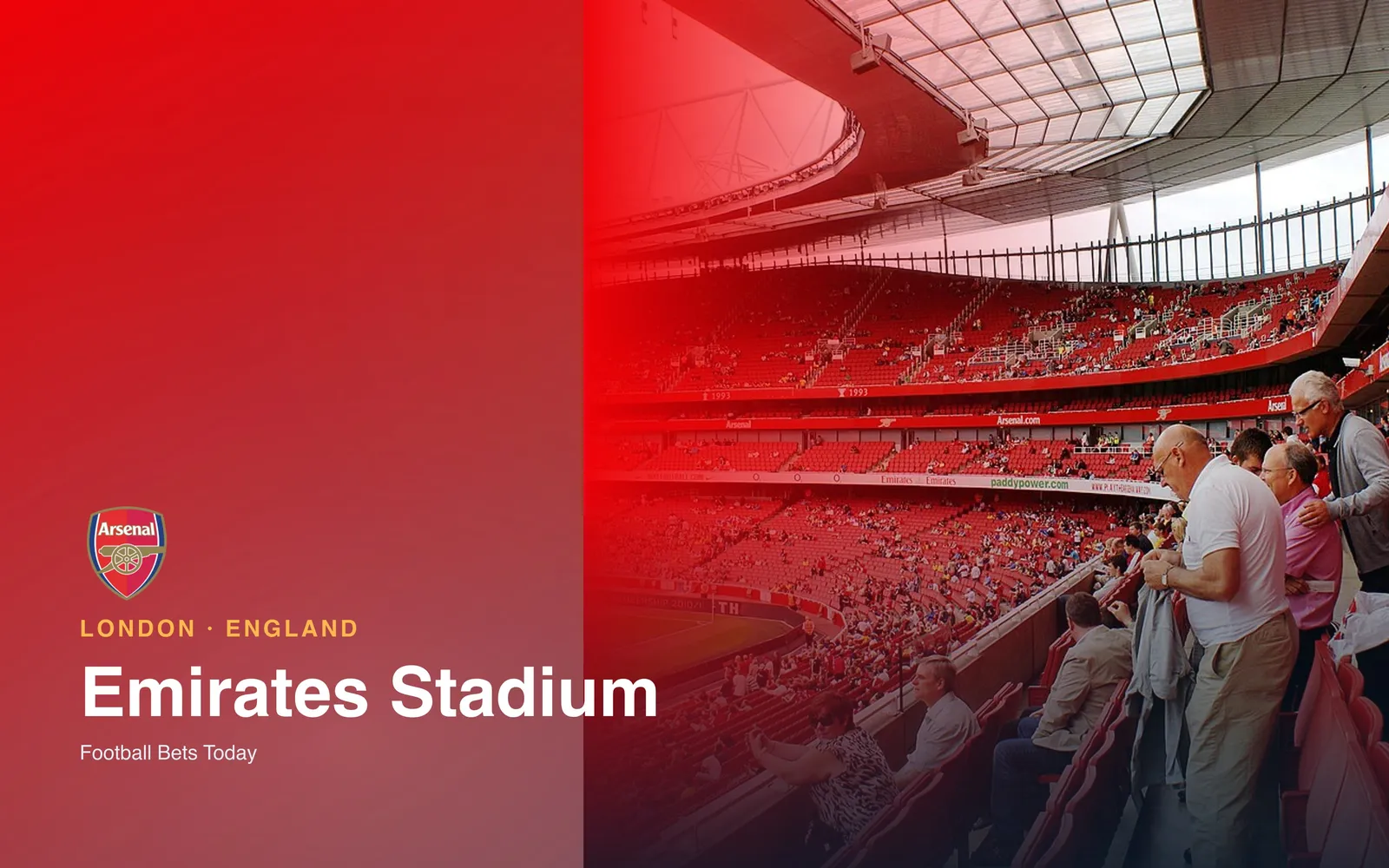
The ground
Facts
| Capacity | 60,704 |
|---|---|
| Opened | 2006 |
| Official name | Emirates Stadium, named for the Emirates airline since the 2006 opening (Ashburton Grove was the working name) |
| Surface | grass |
| Owner | Arsenal Football Club |
| Record attendance | 60,383 · Arsenal v Wolverhampton Wanderers (sources also attribute 60,383 to Arsenal v Liverpool, 27 Oct 2024; verify) (2019) |
| Getting there | Walk from Arsenal (Piccadilly line), Holloway Road, or Finsbury Park (Victoria and Piccadilly lines, National Rail). |
History
Matches it is known for
- First match: Arsenal 2–1 Ajax (Dennis Bergkamp testimonial), 22 July 2006
- Officially opened by Prince Philip, Duke of Edinburgh, 26 October 2006
- Arsenal v Manchester United, 3 November 2007, was an early attendance record (60,161)
In depth
About Emirates Stadium
Key takeaways
- Emirates Stadium is Arsenal’s home ground in north London, about 450 metres from Highbury.
- Its listed seating capacity in 2026 is 60,704, while concert configurations can accommodate about 72,000.
- Arsenal men and Arsenal Women play there, with the women moving to play there in 2024.
- Arsenal bought the Ashburton Grove estate in 2000, and the ground opened as Emirates Stadium in 2006.
- Choose your arrival station and return route before travelling to a match.
Emirates Stadium is a football ground in north London, UK, about 450 metres from Highbury, with a listed seated capacity of 60,704 in 2026. It is home to Arsenal men and Arsenal Women, familiar to football followers across Africa and soccer followers in South Africa.
For a visitor travelling from Nairobi or Lagos, understanding the journey matters almost as much as finding a seat. A London station name can look reassuringly close on a map while sending you towards a different entrance. Start with the capacity and transport details below, then follow the ground’s history back to Highbury and the African players whose careers connect those addresses.
What Is the Capacity of Emirates Stadium?
Emirates Stadium seating capacity is listed as 60,704 in 2026, while a concert configuration can hold about 72,000. Concerts use a different layout from football matches. That distinction explains the different figures attached to the same building. For a football visit, use the seated figure rather than the larger concert estimate.
Capacity and attendance measure different things, so a match crowd can sit below the stadium’s stated limit. The seats made available for a particular event affect the total. Arsenal’s first season here, 2006 to 2007, produced an average attendance of 59,837. Read any record attendance with its match and year attached, especially when comparing reports published before and after changes to the seating layout.
| Detail | Visitor Guide |
|---|---|
| Football seating capacity | 60,704, listed in 2026 |
| Concert capacity | About 72,000, depending on configuration |
| Home teams | Arsenal men and Arsenal Women |
| Location | North London, UK, about 450 metres from Highbury |
| Arsenal station | Nearby arrival station |
| Finsbury Park station | Nearby arrival station |
| Holloway Road station | Nearby; check matchday restrictions |
| Highbury & Islington station | Nearby arrival station |
| Drayton Park station | Nearby; check service availability |
Who Plays at Emirates Stadium?
Arsenal men and Arsenal Women play at Emirates Stadium, with the women moving to play there in 2024. The ground is associated with domestic league football, cup ties and European nights, although the fixture module establishes the competition for each visit. Check the team name as carefully as the opponent: an Arsenal Women ticket and an Arsenal men’s ticket belong to separate events, even when the address is identical.
For Nigerian readers, the connection needs a careful distinction. Nwankwo Kanu played for Arsenal from 1999 to 2004, placing his spell in the Highbury years. Alex Iwobi’s senior Arsenal career from 2015 to 2019 brought a Super Eagles connection to Emirates Stadium, while Ghana’s Thomas Partey played for Arsenal from 2020 to 2025. South Africa’s Daniel Le Roux represented Arsenal from 1957 to 1958, adding an earlier African link to the club’s history.
How Do I Get to Emirates Stadium?
Arsenal, Finsbury Park and Highbury & Islington are useful arrival stations, with Holloway Road and Drayton Park also nearby. Emirates Stadium is just over 2 miles from King’s Cross. Holloway Road can have matchday restrictions, while Drayton Park may be unavailable for weekend travel. Check public transport notices before setting out and choose a return station before joining the crowd outside.
Use the Transport for London journey planner to check the route from your arrival airport to your accommodation and then to the stadium. Visitors flying from Accra should check their actual arrival airport before planning. Allow time for security checks and finding the entrance printed on the ticket.
Why Is It Also Called Ashburton Grove?
Arsenal bought the Ashburton Grove estate in 2000, and the ground opened as Emirates Stadium in 2006. The naming agreement arrived in 2004. Ashburton Grove refers to the stadium development site, rather than another Arsenal ground elsewhere in London.
Where Is Emirates Stadium in the UK?
Emirates Stadium is in north London, England, about 450 metres from Highbury. Readers searching for “Emirates Stadium UK” are looking for this London football venue. “The Emirates” and “Emirates” are common shortened references to the ground, although the latter also names its airline sponsor. Arsenal changed buildings while keeping their home within the same part of the city.
When Did Arsenal Leave Highbury for Emirates Stadium?
Arsenal moved from Highbury to Emirates Stadium in 2006, opening the new ground for football on 22 July. Prince Philip officially opened the stadium on 26 October 2006. Keeping those occasions separate answers a common confusion: the first football match and the ceremonial opening happened on different dates.
The project cost £390 million and was designed by HOK Sport, the architectural practice later known as Populous. Planning approval came on 10 December 2001, followed by groundbreaking in February 2004 after funding was secured. The move gave Arsenal a larger home close to their old one. For supporters comparing football stadiums, that combination of expansion and neighbourhood continuity is central to understanding this ground.
Which Seats Suit a First Visit?
The best seat depends on whether you value the whole tactical picture, proximity to the players or a place among travelling supporters. The pitch measures 105 by 68 metres. A central side view helps you follow movement across the pitch; a position behind a goal gives a different sense of attacks developing.
Visiting supporters should use the away allocation and the entrance identified on their ticket. If you mean a first visit as an Arsenal supporter, study the seating map before choosing a location, including the tier and accessibility arrangements. Upper positions make team shape easier to read, while lower positions bring individual contests closer. The right choice is the view that suits how you enjoy football, rather than whichever block sounds most famous.
How Can an African Visitor Attend or Take a Tour?
An African visitor should arrange match admission through the club’s authorised process and confirm the fixture before committing to travel. Searches for Arsenal stadium tickets need that extra care because availability, eligibility and entry arrangements differ between events. Keep the booking details accessible and read the bag and entry instructions. For the journey home, allow for the crowd leaving the stadium as well as the journey shown by a transport planner.
An Arsenal stadium tour is a separate visit, with access depending on the event schedule. Check what the tour includes before choosing a date. Allow generous time to organise travel documents and accommodation. Keep accommodation, airport transfers and match arrangements together, especially when relatives in London are helping organise the visit.
Which Concerts and Football Matches Shaped the Ground?
Bruce Springsteen became the stadium’s first concert performer on 30 May 2008, adding a different use for the football ground. The approximate concert capacity of 72,000 describes an event configuration, rather than a football attendance record. Stage positioning and access requirements still matter. Treat any claim about future expansion in the same careful way: an ambition, an approved design and an opened seating area describe different stages.
Arsenal’s 7 to 0 victory over Slavia Prague on 23 October 2007 supplies a defining early football memory. It showed the attacking football supporters hoped the new home would accommodate. The updated records module identifies attendance milestones with their dates, allowing comparisons between crowds from different years.
How Do Fans Across Africa Follow Emirates Matches?
Read each Emirates fixture with all four African time zones together: WAT for Nigeria, EAT for Kenya and Uganda, SAST for South Africa and GMT for Ghana. Seasonal clock changes in London alter the difference between the stadium’s local time and African clocks. The fixture module supplies the conversion for the scheduled date, so check that entry when arranging your viewing.
For a gathering in Nairobi or Kampala, use the EAT listing to agree when everyone should arrive. In Lagos, plan the journey home around the expected finish as well as the start. Check the viewing information for your country and competition before choosing where to watch. Confirm whether Arsenal men or Arsenal Women are playing when sharing the fixture details.
FAQ
What is the capacity of Emirates Stadium?
Emirates Stadium has a listed seated capacity of 60,704 in 2026. Concert configurations can accommodate about 72,000 because concerts use a different layout.
Who plays at Emirates Stadium?
Arsenal men and Arsenal Women play at Emirates Stadium, with the women moving to play there in 2024. The venue also hosts other events.
How do I get to Emirates Stadium?
Travel towards Arsenal, Finsbury Park or Highbury & Islington, then walk to your designated entrance. Holloway Road and Drayton Park are also nearby, but check matchday restrictions and service availability before choosing them. Confirm your return route before entering the stadium.
Why is Emirates Stadium also called Ashburton Grove?
Arsenal bought the Ashburton Grove estate in 2000. The stadium built there opened as Emirates Stadium in 2006.
Where is Emirates Stadium in the UK?
Emirates Stadium is in north London, England, about 450 metres from Arsenal’s former home at Highbury.
Written by Tunde Akinwande, 2026-11-11.