
Pretoria (Arcadia), South Africa · opened 1923
Capacity 51,762. Who plays here, the matches it is known for, and how to get there.
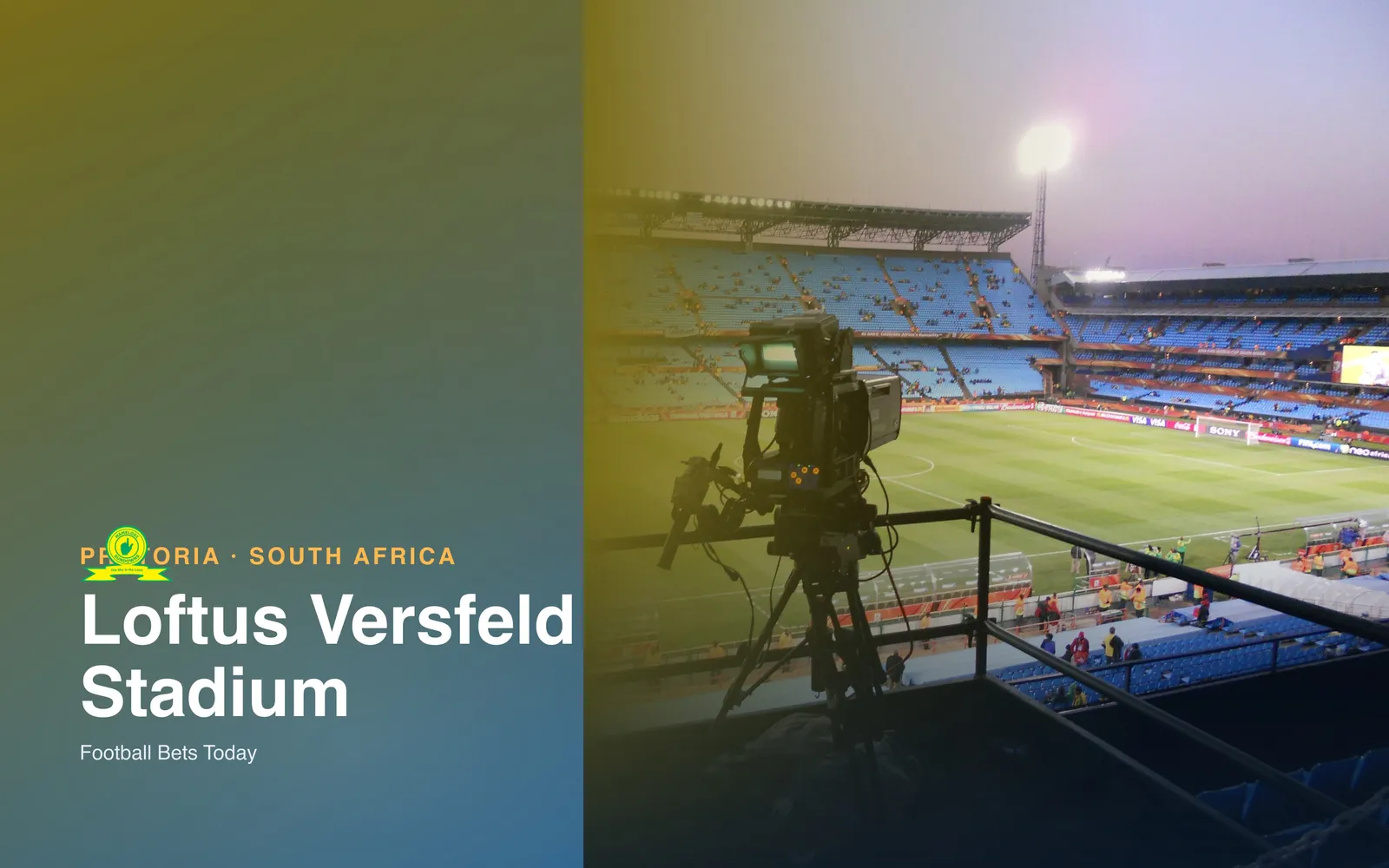
The ground
Facts
| Capacity | 51,762 |
|---|---|
| Opened | 1923 · renovated Expanded 2008, with works completed January 2009 for the Confederations Cup and 2010 World Cup |
| Official name | Loftus Versfeld Stadium. It carried sponsor names such as Minolta Loftus and Securicor Loftus, and reverted to Loftus Versfeld in 2005. |
| Surface | grass |
| Owner | Blue Bulls Rugby Union |
| Getting there | Hatfield Gautrain station is the listed public transport link, in the Arcadia/Hatfield area of Pretoria. |
History
Matches it is known for
- Coetzee vs Tate WBA heavyweight title fight, 1979
- Rugby World Cup matches including the third-place play-off, 1995
- Super 14 final, Bulls 61-17 Chiefs, 2009
- Confederations Cup matches, 2009
- FIFA World Cup group matches and a round-of-16 match, 2010
- United Rugby Championship final, 2024
In depth
About Loftus Versfeld Stadium
Key takeaways
- Loftus Versfeld Stadium is a soccer and rugby ground in Pretoria.
- Its listed capacity in November 2026 is 51,762, while its 2010 World Cup configuration held 42,858.
- Loftus hosted Ghana, Cameroon and Algeria during the 2010 World Cup.
- Hatfield Gautrain station is the public transport link to use when planning a stadium visit.
- Ghana beat Serbia 1 to 0 at Loftus on 13 June 2010.
Loftus Versfeld Stadium is a soccer and rugby stadium in Pretoria, with a capacity of 51,762 recorded in November 2026. Its international soccer history includes matches at the 2009 Confederations Cup and 2010 World Cup.
For Ghana supporters, Loftus carries a particularly happy World Cup memory. Knowing which event you are attending matters as much as knowing the ground’s name, because seating arrangements and access can change. The guide below explains the capacity figures, the African soccer connections and how to put together a practical Pretoria matchday.
What Is the Capacity of Loftus Versfeld Stadium?
The November 2026 capacity figure for Loftus Versfeld Stadium is 51,762, while its capacity for the 2010 World Cup was 42,858. The smaller number belongs specifically to the tournament layout used for the World Cup.
For a particular match, the useful figure is the allocation available through that event’s ticket arrangements. Treat the dated capacity below as a reference, then check the seating plan before choosing your ticket.
Capacity and attendance answer different questions. Capacity describes the space available under a stated arrangement; attendance describes how many people were recorded at an event. When comparing Loftus figures, match the date and sport first. A tournament capacity cannot tell you how many seats remain available for a separate club fixture.
| Figure | Date or Configuration | How to Read It |
|---|---|---|
| 51,762 | Listed capacity, November 2026 | General stadium capacity figure. |
| 42,858 | 2010 World Cup | Capacity for that tournament’s stadium configuration. |
Who Plays Soccer and Rugby at Loftus?
South Africa and Ghana met at Loftus in a soccer friendly in 1994, while Ghana, Cameroon and Algeria played here during the 2010 World Cup. In rugby, the Bulls contested the 2009 Super 14 final and the 2024 United Rugby Championship final at the ground. That shared use explains why searches for Loftus can lead to quite different fixture lists, even when supporters are looking at the same ground.
For a Mamelodi Sundowns visit, begin with the fixture card and check whether Loftus is the named venue. Read the competition beside the opponent too, and consult its format to understand how the result affects the log or progression. Visiting African supporters should make that venue check before booking travel.
How Do I Get to Loftus Versfeld Stadium?
Hatfield Gautrain station is the public transport link for Loftus in Pretoria. Plan the journey in stages: reach Hatfield, check an appropriate onward route to your entrance, and arrange the return before leaving home. Do not assume that a train timetable, event shuttle or pedestrian access arrangement will be identical for soccer and rugby.
If you drive, check the event’s parking instructions and book an allocated space where that option is offered. Allow extra time for traffic approaching the ground and for finding the correct gate. Before setting off, keep your ticket accessible, confirm the permitted bag arrangements and save your return pickup details. Check the final train departure against the likely finish, including possible extra time in a cup tie.
For a group travelling together, agree on a meeting point before separating at the turnstiles. Save the entrance details and return address somewhere accessible without a mobile connection. Anyone needing step free access should confirm the route from their arrival point to the allocated seat, including the arrangements for leaving after the match.
Where Is Loftus Versfeld Stadium in Pretoria?
Loftus Versfeld Stadium is in Pretoria, at an altitude of about 1,350 metres. Use the full stadium name and your designated entrance when planning the route, rather than relying only on the shorter Loftus Stadium search. Your ticket’s gate information should determine the final approach to the ground.
Pretoria’s altitude is part of the setting, although it does not decide a match before kick off. For spectators, the practical response is to pace the journey and check the weather forecast. A change in temperature can shape the afternoon or evening. Choose clothing for the expected finish as well as the conditions when you leave.
How Did Loftus Versfeld Get Its Name?
The stadium opened in 1923 as the Eastern Sports Ground and took the Loftus Versfeld name in 1932. It honours R. L. O. Versfeld, associated with the founding of organised sport in Pretoria, following his death in May 1932.
The name has changed too: Minolta Loftus was used from 1998 to 2003, followed by Securicor Loftus from 2003. Loftus Versfeld returned on 1 September 2005. Those names explain older references, while the everyday shorthand Loftus connects supporters across the different sporting eras.
When reading an archive, use the event date alongside the venue name to place the account in its proper era. Keep the opening date, naming history and individual tournament arrangements separate: each describes a different part of the ground’s story.
Why Does Loftus Matter to African Soccer?
Loftus has a firm place in African soccer history through its 2009 Confederations Cup and 2010 World Cup matches. It staged three group matches in the former tournament and six matches in the latter. Ghana beat Serbia 1 to 0 on 13 June 2010, giving supporters in Accra a direct connection to a ground often introduced through rugby.
Cameroon met Denmark on 19 June 2010 and Algeria faced the USA on 23 June 2010, with both African sides playing at Loftus. Loftus also hosted Paraguay’s meeting with Japan on 29 June 2010, decided 5 to 3 on penalties after a goalless draw. Bafana Bafana’s connection with Ghana reaches further back: South Africa and Ghana contested a friendly here on 26 November 1994, which finished 2 to 1 to the hosts, another chapter in the ground’s African international history.
What Else Has Loftus Hosted?
Loftus has hosted major rugby occasions and heavyweight boxing alongside soccer. Its 1995 Rugby World Cup programme comprised five matches, including France’s meeting with England in the third place play off on 22 June 1995, which finished 19 to 9. Later rugby landmarks include the Bulls’ 61 to 17 win against the Chiefs in the 2009 Super 14 final and their meeting with Glasgow Warriors in the 2024 United Rugby Championship final, which finished 21 to 16 to Glasgow.
The boxing attendance needs separate treatment from the seated capacity: about 80,000 people were reported for Gerrie Coetzee against John Tate on 20 October 1979. Gerrie Coetzee challenged John Tate for the vacant WBA heavyweight title on that date. That historical estimate should not be presented as a verified stadium attendance record or a modern ticket allocation.
How Can Fans Across Africa Follow Matches at Loftus?
A Loftus broadcast listing needs two checks: the territory covered and the time zone attached to kick off. From Lagos or Accra, Nairobi or Kampala, or a South African viewing venue, start with the dated fixture and its country specific coverage details. Keep all four clock labels visible together: WAT, EAT, SAST and GMT. Before inviting friends to watch, confirm that everyone has read the same fixture date and the correct clock label.
For a Loftus soccer fixture, distinguish the scheduled start from the beginning of studio coverage. Set any reminder against kick off, then allow separate time for the build up if you want to follow the team discussion. Recheck the fixture details before settling your viewing arrangements, especially when sharing a listing with relatives elsewhere in Africa.
At the ground, match the ticket’s stand and gate to your arrival route before setting out for Pretoria. Keep the event’s admission details beside your transport booking so both are easy to retrieve. The wider soccer stadiums collection can help with planning a trip involving several grounds; each visit still needs its own entrance instructions and return journey.
FAQ
What Is the Capacity of Loftus Versfeld Stadium?
The November 2026 listing gives Loftus Versfeld Stadium a capacity of 51,762. Its 2010 World Cup configuration held 42,858, which explains the smaller figure in tournament records.
Who Plays at Loftus Versfeld Stadium?
Historical soccer visitors include South Africa and Ghana for their 1994 friendly, plus Ghana, Cameroon and Algeria during the 2010 World Cup. The Bulls contested rugby finals here in 2009 and 2024. Check the event listing to see who is playing and where.
How Do I Get to Loftus Versfeld Stadium?
Plan your public transport journey through Hatfield Gautrain station, then check the onward route to your stadium entrance. If driving, follow the event’s parking instructions. Confirm your return transport before setting off.
Where Is Loftus Versfeld Stadium?
Loftus Versfeld Stadium is in Pretoria, South Africa, at an altitude of about 1,350 metres. Use the full stadium name and the entrance shown on your ticket when planning your route.
Written by Thabo Mokoena, 2026-11-11.