
Mbombela (Nelspruit), South Africa · opened 2010
Capacity 43,500. Who plays here, the matches it is known for, and how to get there.
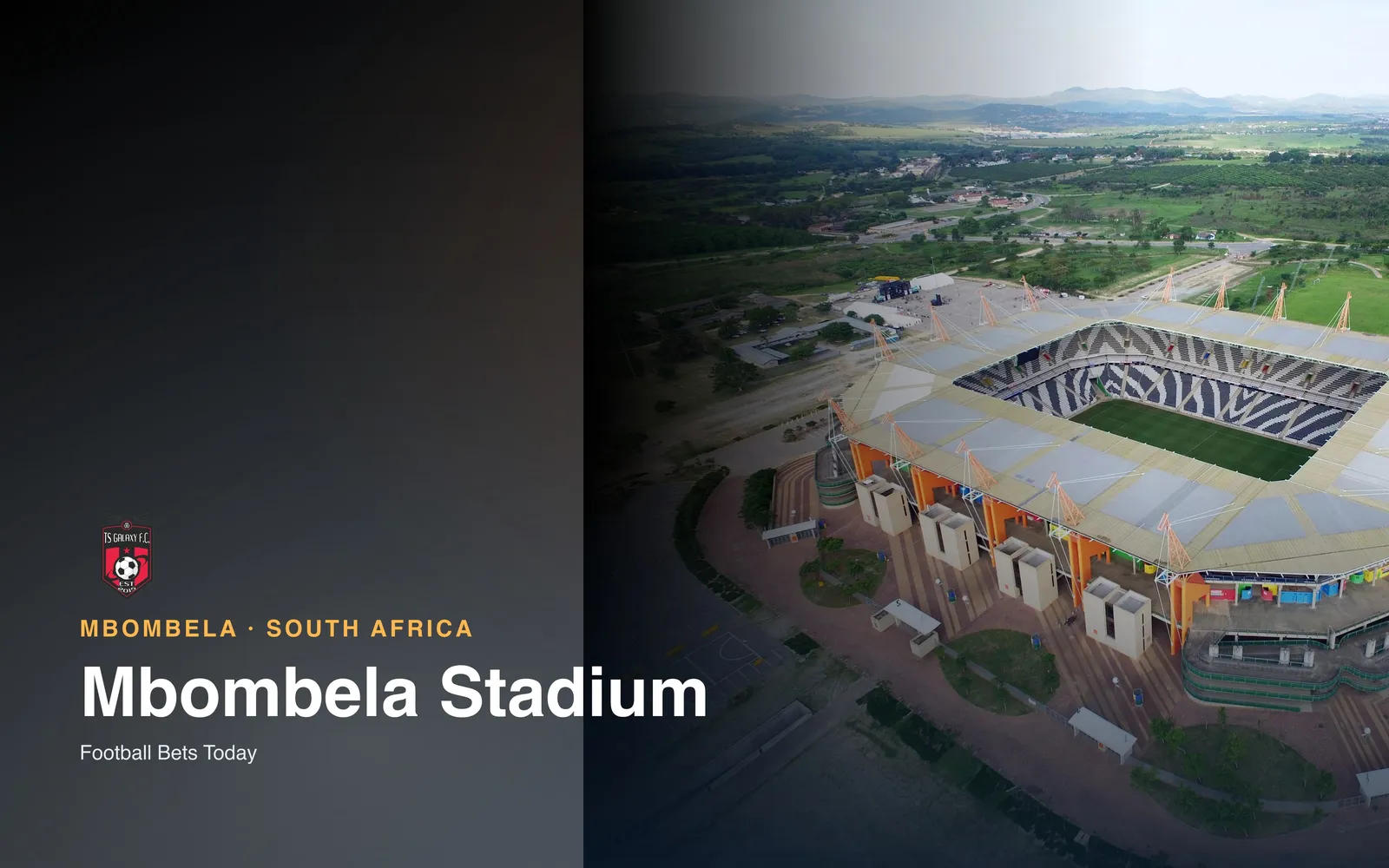
The ground
Facts
| Capacity | 43,500 |
|---|---|
| Opened | 2010 |
| Official name | Mbombela Stadium |
| Surface | hybrid |
| Owner | Mbombela Local Municipality |
| Record attendance | 43,578 · Springboks vs Argentina (highest figure listed, above stated capacity) (2024) |
| Getting there | Transport details were not verified. |
History
Matches it is known for
- FIFA World Cup group matches including Italy vs New Zealand and Australia vs Serbia, 2010
- First rugby match, Pumas 22-21 Blue Bulls, 2010
- Africa Cup of Nations quarter-final and semi-final, 2013
- Springboks vs Wales, 2014
- Springboks vs All Blacks, 2022
- South Africa 3-0 Rwanda, 2026 World Cup qualifier, 2025
In depth
About Mbombela Stadium
Key takeaways
- Mbombela Stadium is at 1 Bafana Road in Mbombela, formerly Nelspruit, in Mpumalanga.
- The capacity listed in the 2026 register is 43,500 seats, compared with 40,929 for the 2010 World Cup.
- The Pumas rugby side began playing at the stadium in 2010.
- Nigeria played group matches here during the 2013 AFCON, and Ghana contested their semi final here.
- Nelspruit Stadium and Mbombela Stadium refer to the same ground.
Mbombela Stadium is a soccer and rugby ground at 1 Bafana Road in Mbombela, formerly Nelspruit, Mpumalanga, about 6 km west of the city centre. Its listed capacity in 2026 is 43,500 seats, and the Pumas rugby side began playing here in 2010.
For a Premiership supporter, this is a ground with an African tournament story worth knowing. The practical questions belong together: which capacity figure to trust, where the entrance is, and how a match fits around a journey from Johannesburg or Kruger National Park.
Where Is Mbombela Stadium in Nelspruit?
The Mbombela Stadium location is west of central Mbombela, in South Africa's Mpumalanga province. Use 1 Bafana Road as your destination, then follow the entrance instructions issued for your event. From Johannesburg, the main road approach is east along the N4 towards Mbombela. Allow room in your plans for traffic and the final approach to the ground, rather than treating arrival in the city as arrival at your seat.
From Kruger National Park, your route depends on the gate where you leave, so choose that gate before planning the drive. A park visit and an evening match can share an itinerary, but gate closing times and match access need separate checks. For readers travelling from Lagos, Accra, Nairobi or Kampala, settle the flight and ground transfer before adding a safari around the soccer.
What Is the Capacity of Mbombela Stadium?
Mbombela Stadium capacity is listed as 43,500 seats in the 2026 register, while its capacity for the 2010 World Cup was 40,929. Those figures describe different contexts: a general seating figure and a tournament configuration.
A sold out 43,578 watched the Springboks beat Argentina 48 to 7 in 2024. Attendance and capacity need separate labels, rather than an assumption that one corrects the other. For buying tickets, the event's released seating plan matters most. A stadium total does not tell you which blocks are available, which entrance serves them or how many tickets remain.
| Figure | Date or context | How to read it |
|---|---|---|
| 43,500 seats | 2026 register | The general seating capacity used in this guide. |
| 40,929 seats | 2010 World Cup | The capacity recorded for that tournament configuration. |
| 43,578 spectators | Springboks against Argentina, 2024 | A sold out attendance for the Springboks' 48 to 7 victory, recorded separately from seating capacity. |
Who Plays at Mbombela Stadium?
The Pumas rugby side began playing at Mbombela Stadium in 2010. That gives the ground a local sporting rhythm beyond its international occasions: league soccer and Currie Cup rugby both belong in its story. Soccer supporters should read the dated fixture entry for the competition, venue and starting time before arranging travel.
The first Currie Cup match here brought a Pumas victory over the Blue Bulls, 22 to 21, on 27 August 2010. The first Premiership fixture followed on 14 November 2010, when Wits against Mamelodi Sundowns was moved to Nelspruit. Across South Africa's soccer stadiums, shared use makes checking the actual event essential. The home club's name alone does not establish where every fixture will be played.
Why Are Nelspruit and Mbombela Both Used?
Nelspruit was officially renamed Mbombela in October 2009, and the stadium's name followed the city's change. That explains why searches for Nelspruit Stadium and Mbombela Stadium lead to the same venue. Construction began in February 2007 and finished in November 2009. Bafana Bafana's 4 to 0 friendly win over Thailand is dated 16 May 2010 in the article text, while another record gives 15 October 2009, so the opening date should be treated with care. Using those milestones separately avoids confusing construction completion with the opening match.
Which World Cup and AFCON Matches Were Played Here?
Mbombela hosted four group matches at the 2010 World Cup, including Ivory Coast's final appearance in that tournament. Chile beat Honduras 1 to 0 on 16 June, before Italy drew 1 to 1 with New Zealand on 20 June. Australia defeated Serbia 2 to 1 on 23 June, and Ivory Coast beat North Korea 3 to 0 on 25 June. Each result belongs to a different group, so the ground's match list should not be read as one qualifying log.
At AFCON in 2013, Nigeria played group matches here. For Super Eagles supporters, Nelspruit belongs to that tournament journey. Ghana's connection is equally specific: the Black Stars contested their semi final here against Burkina Faso. Burkina Faso had also beaten Togo 1 to 0 after extra time at the ground in their quarter final.
The international timeline continued with Springbok Tests, including a 26 to 10 victory over New Zealand in 2022 and a 48 to 7 victory over Argentina in 2024.
Why Does Mbombela Stadium Have Giraffes and Zebra Seats?
The giraffe shaped roof supports and zebra patterned seats connect the stadium's design with nearby Kruger National Park. Its 18 supports give the roof its distinctive outline, while the seating carries the wildlife reference into the bowl. In the completed design documented for 2010, the roof covered about 94% of seats. Cover is useful, but your block and the weather still matter when deciding what to bring for an afternoon or evening match.
The groundstaff worked with a rye grass and Desso GrassMaster pitch at the 2013 AFCON, with cynodon grown in summer, making seasonal grass management part of the ground's sporting background.
How Should You Plan a Matchday Visit?
Plan your visit around the event's confirmed entrance, ticket instructions and transport arrangements. Kruger Mpumalanga International Airport is the nearby commercial airport serving the area, but arrange the onward journey separately. Parking availability, vehicle entrances and any shuttle arrangements should come from the event notice. Buy through the organiser's designated ticket channel, check the seat block before paying and keep the ticket accessible before joining the entrance queue.
For personal safety, arrange a clear meeting point and a return journey before entering, and keep valuables secure in crowds. Follow steward directions and check event rules for bags and permitted items. If you extend the trip, Kruger offers the wildlife connection behind the stadium design, while the Panorama Route gives you another regional excursion. Keep those outings flexible enough to protect your arrival time at the ground.
How Can Fans Across Africa Follow Matches From Mbombela?
Fans in South Africa, Nigeria, Ghana, Kenya and Uganda should use the dated viewing information for the particular competition and fixture. Rights and streaming availability vary by territory, so the venue does not establish which service carries a match. Read the broadcast entry alongside the result status: a scheduled fixture, a live match and a completed result require different information, especially when following soccer on a phone. For viewers in Kenya and Uganda exploring the ground's African tournament history, Ivory Coast's 3 to 0 win over North Korea on 25 June 2010 is a specific match to look for in World Cup highlights.
Keep the displayed time zones together when planning your viewing. Nigeria uses WAT, Kenya and Uganda use EAT, South Africa uses SAST, and Ghana uses GMT. A 15:00 SAST kick-off is 14:00 WAT, 16:00 EAT and 13:00 GMT. The fixture module should supply those equivalents beside the match date. For a stadium visit, SAST is the local reference; before leaving, check the venue, entrance instructions and return transport against the confirmed event details.
FAQ
What is the capacity of Mbombela Stadium?
Mbombela Stadium has a listed capacity of 43,500 seats in the 2026 register. Its recorded capacity for the 2010 World Cup was 40,929, reflecting a different event configuration.
Who plays at Mbombela Stadium?
The Pumas rugby side began playing at Mbombela Stadium in 2010. For soccer and rugby visits, check the dated fixture entry for the competition, venue and starting time before arranging travel.
How do I get to Mbombela Stadium?
Head to 1 Bafana Road in Mbombela, formerly Nelspruit, then follow the event's entrance instructions. From Johannesburg, approach along the N4 towards Mbombela; from Kruger, plan around your chosen exit gate. Confirm parking and your return journey before travelling.
Are Nelspruit Stadium and Mbombela Stadium the same ground?
Yes. Nelspruit Stadium and Mbombela Stadium refer to the same venue at 1 Bafana Road. Nelspruit was officially renamed Mbombela in October 2009.
Written by Thabo Mokoena, 2026-11-11.