
Wolverhampton, England · opened 1889
Capacity 31,750. Who plays here, the matches it is known for, and how to get there.
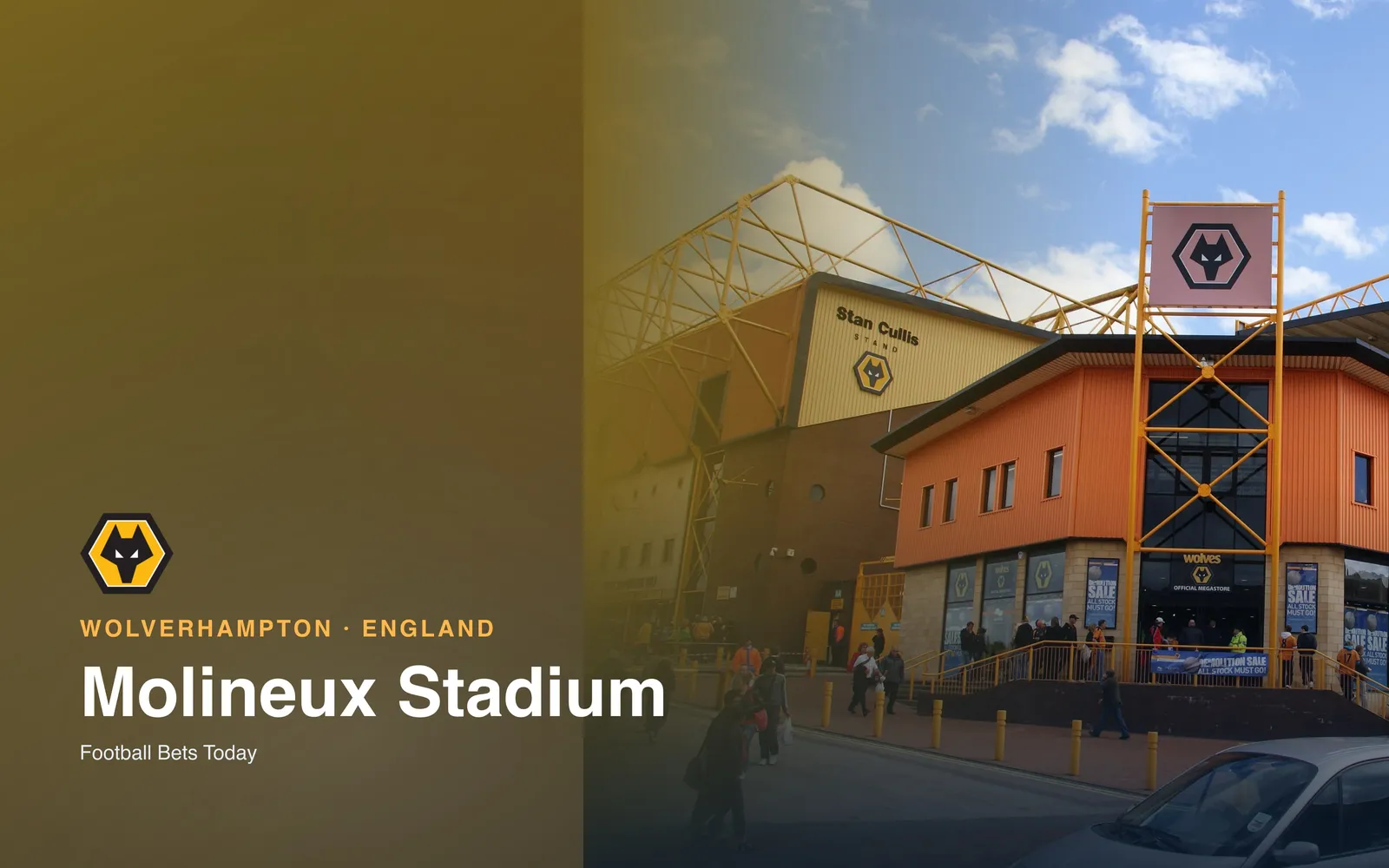
The ground
Facts
| Capacity | 31,750 |
|---|---|
| Opened | 1889 · renovated 1978–1979, 1991–1993 and 2011–2012 |
| Official name | Molineux Stadium (no sponsor name) |
| Surface | hybrid |
| Owner | Wolverhampton Council |
| Record attendance | 61,315 · Wolves v Liverpool, First Division (1939) |
| Getting there | Waterloo Road, Wolverhampton; about 0.6 mi from St George's Midland Metro tram stop and 0.7 mi from Wolverhampton railway station. |
History
Matches it is known for
- First floodlit game, Wolves 3–1 South Africa, 1953
- First UEFA Cup Final (first leg), 1972
- Six England senior internationals and four England under-21 internationals
- Bon Jovi concert, 2003
In depth
About Molineux Stadium
Key takeaways
- Molineux Stadium stands on Waterloo Road in Wolverhampton and has been Wolves' home since 1889.
- Its listed capacity in 2026 is 31,750, while the historical attendance record is 61,315 against Liverpool in 1939.
- Wolverhampton railway station is about 0.7 miles from the ground, making rail a practical option.
- Wolves beat South Africa by three goals to one in the first floodlit match at Molineux in 1953.
- The renovated stadium was officially opened with a friendly against Honvéd on 7 December 1993.
Molineux Stadium is the football ground on Waterloo Road in Wolverhampton, home to Wolverhampton Wanderers since 1889. Its listed capacity in 2026 is 31,750, all seated, making it a familiar football and soccer setting for supporters across Africa.
For someone watching from a Lagos viewing centre or a Johannesburg lounge, the gold shirts often register before the ground itself. Yet Molineux has an African connection that reaches back to its first floodlit match in 1953. Knowing that story, along with how the stands are named and how to reach the ground, gives the television picture more meaning, especially when a UK trip offers the chance to visit.
What Is the Capacity of Molineux Stadium?
Molineux Stadium capacity is listed as 31,750 in 2026, with seating throughout the ground. Its historical record attendance is much larger: 61,315 watched Wolves face Liverpool in the First Division on 11 February 1939. That crowd belonged to a different stadium arrangement, when standing terraces accommodated supporters in ways that the modern seating layout does not. Comparing those figures without explaining the terraces gives the wrong impression of how the ground has changed.
The attendance record for the current all seated configuration is 31,746, recorded against Liverpool in the Premier League on 23 January 2020. Keep that figure separate from both the listed capacity and the historical record. Capacity describes the ground's stated provision, while an attendance records the crowd at a particular match. The removal of terraces following the Taylor Report explains why the modern benchmark sits well below the crowd recorded in 1939.
Who Plays at Molineux Stadium?
Wolverhampton Wanderers are the resident club, having made Molineux their home in 1889. Wolves fixtures give the ground its regular football rhythm, while visiting supporters bring their own reasons to remember it. The lineup and fixtures modules show who is involved in a match and when it takes place, so any player connection is best checked there before you settle on a fixture to follow.
Molineux has hosted six full England internationals, starting with the win by six goals to one over Ireland on 7 March 1891. Those appearances give the ground a place beyond club football, although Wolves remain its central identity. When reading a fixture listing, check the competition as well as the teams: an international at Molineux carries a different context from a Wolves home match.
How Do You Reach Molineux?
Wolverhampton railway station is about 0.7 miles from Molineux, so the final stage on foot to Waterloo Road is manageable for visitors comfortable walking that distance. Check the route before leaving the station and allow additional time for crowds around the ground. The return service deserves the same attention as the outward journey.
Travellers using the Metro can instead plan around St George's, about 0.6 miles from the stadium. Treat rail and tram as alternative approaches rather than assuming a tram is needed after arriving by train.
Who Are the Molineux Stands Named After?
Three stands carry names that help explain the club before a ball is kicked: the Stan Cullis Stand, the Billy Wright Stand and the Sir Jack Hayward Stand. The Stan Cullis Stand was fully opened as a replacement on 11 August 2012. The Sir Jack Hayward Stand was previously the Jack Harris Stand and took its present name in August 2015. Read the stand name alongside the block and entrance details when choosing a seat.
| Stand | Namesake | Note |
|---|---|---|
| Sir Jack Hayward Stand | Sir Jack Hayward | Formerly the Jack Harris Stand, renamed in August 2015 |
| Stan Cullis Stand | Stan Cullis | Replacement stand fully opened on 11 August 2012 |
| Billy Wright Stand | Billy Wright | Named in his honour |
Which Matches and Rebuilds Shaped Molineux?
Molineux opened as Wolves' home in 1889, but the floodlit friendlies of the 1950s gave it a wider football audience. The defining African date is 30 September 1953, when Wolves beat South Africa by three goals to one in the ground's first floodlit game. For South African readers, that is a direct connection to the stadium's development. The visitors helped inaugurate the evening football setting that would become central to Molineux's reputation.
The floodlit programme helped make Molineux a meeting place for clubs from abroad, and taller lights followed in 1957. European competition later brought another landmark when the ground hosted a leg of the first UEFA Cup final in 1972. When comparing football stadiums, this is what gives Molineux particular weight: its importance includes the fixtures it staged and the football possibilities those evenings represented, alongside its physical size.
The modern ground took shape through rebuilding after the Taylor Report. The North Bank terrace was demolished in October 1991, and replacement stands followed between 1992 and 1993. A friendly against Honvéd marked the renovated stadium's official opening on 7 December 1993. The replacement Stan Cullis Stand fully opened on 11 August 2012, while the Jack Harris Stand became the Sir Jack Hayward Stand in August 2015, commemorating Hayward after his death that year.
Where Does the Name Molineux Come From?
Molineux takes its name from Benjamin Molineux, a local merchant who bought the land in 1744. The name therefore predates Wolves' arrival in 1889 and connects the football ground with an older part of Wolverhampton's story. For anyone searching for Molineux Stadium Wolverhampton, the important practical distinction is between the stadium name and its street address. Use Waterloo Road when checking directions, then match the approach to the entrance printed on your ticket.
What Should a First Visit From Africa Be Like?
A first visit works best with time to explore the stadium exterior before joining the entrance queues. Molineux sits close enough to the city centre for the approach to feel part of Wolverhampton rather than a separate destination. Take in how the stands surround the pitch. The playing area measures 105 by 68 metres, a useful reference when television angles have shaped your sense of its proportions.
Choose a seat according to what you want to watch. A position along the side offers a useful view of team shape, while a place behind a goal changes your perspective on attacking movement and finishing. Obtain tickets through the club's designated channels, read any purchase conditions and check entrance information before travelling. Availability belongs with the fixture, so avoid planning around an assumed seat.
How Do Fans Across Africa Follow Matches at Molineux?
The fixture module labels each kick off in local time: WAT for Nigeria, EAT for Kenya and Uganda, SAST for South Africa and GMT for Ghana. Britain changes its clocks seasonally, so a remembered time difference can cause confusion. Check the displayed local kick off for each fixture, particularly around British clock changes, before arranging a viewing centre visit or gathering at home.
Broadcast information should be checked by country and competition in the viewing module, because coverage of a league fixture need not match coverage of a cup tie. The results module then separates completed matches from upcoming fixtures, while confirmed lineups identify the players taking part. For a stadium visit, finish the same preparation with your return journey: check the final whistle against the transport timetable and leave room for the walk back through the crowd.
FAQ
What is the capacity of Molineux Stadium?
Molineux Stadium has a listed capacity of 31,750 in 2026, with seating throughout. Its historical attendance record is 61,315 against Liverpool in 1939, while the current configuration's record is 31,746 against Liverpool in 2020.
Who plays at Molineux Stadium?
Wolverhampton Wanderers play at Molineux and have called it home since 1889. Molineux has also hosted six full England internationals, starting with the win by six goals to one over Ireland on 7 March 1891.
How do I get to Molineux Stadium?
Travel to Wolverhampton railway station, about 0.7 miles from the stadium, then walk towards Waterloo Road. St George's Metro stop provides another approach, about 0.6 miles from the ground.
When was the first floodlit match at Molineux?
The first floodlit game at Molineux was on 30 September 1953, when Wolves beat South Africa by three goals to one.
Written by Tunde Akinwande, 2026-11-11.