
Durban, South Africa · opened 2009
Capacity 55,500. Who plays here, the matches it is known for, and how to get there.
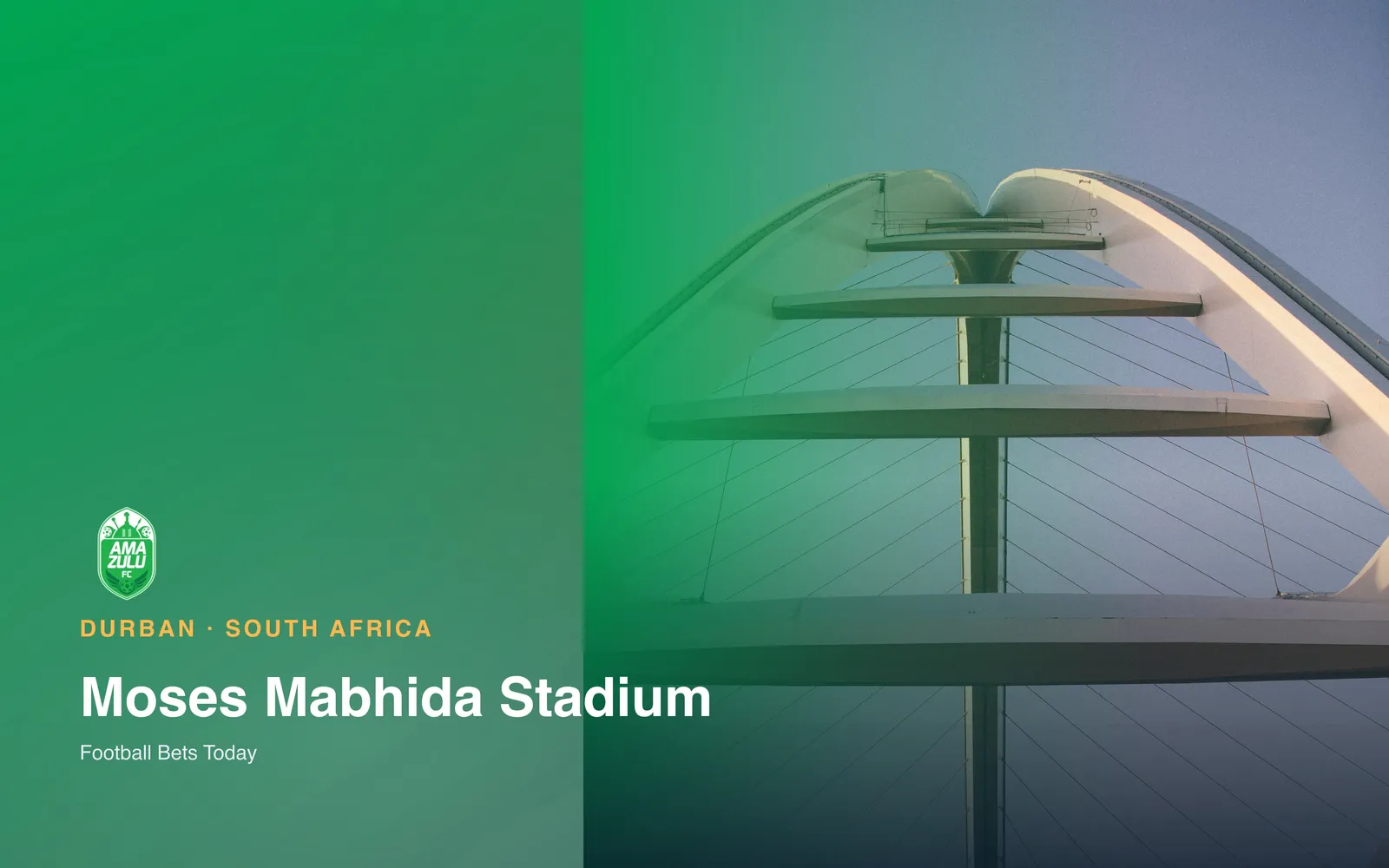
The ground
Facts
| Capacity | 55,500 |
|---|---|
| Opened | 2009 · renovated Renovation period listed from 2025 |
| Official name | Moses Mabhida Stadium. It was called Durban Stadium during the 2010 World Cup. |
| Surface | grass |
| Owner | eThekwini Municipality |
| Record attendance | 62,660 · Germany vs Australia, 2010 World Cup (highest attendance listed) (2010) |
| Getting there | There is a transport station on site, and a funicular runs up the arch. I did not verify other transport details. |
History
Matches it is known for
- Opening match AmaZulu vs Maritzburg United, 2009
- FIFA World Cup: five group matches, a round-of-16 match and the Germany vs Spain semi-final, 2010
- South Africa vs India T20I, 2011
- Africa Cup of Nations: group matches, a quarter-final and a semi-final, 2013
- Coronation of King Misuzulu, 2022
In depth
About Moses Mabhida Stadium
Key takeaways
- Moses Mabhida Stadium has a listed soccer capacity of 55,500 in the stadium register checked in 2026.
- Its 2010 World Cup configuration held 62,760, while expansion to 75,000 is a separate design provision.
- The stadium stands beside Kings Park in Stamford Hill, Durban, and has hosted AmaZulu since 2009.
- Nigeria beat Mali 4 to 1 here in the 2013 Africa Cup of Nations semi final.
- Match access, parking and attraction availability need checking against the dated event arrangements before travelling.
Moses Mabhida Stadium is a soccer and events venue in Stamford Hill, Durban, KwaZulu Natal, with a listed soccer capacity of 55,500 in the register checked in 2026. Opened in 2009, it has been a home for AmaZulu and has also staged Bafana Bafana matches. Its arch gives Durban a recognisable skyline, but the seating configuration matters just as much when you are choosing an event.
For a supporter, the useful distinction is between a match ticket and an attraction booking, because they serve different visits. The guide below separates the capacity figures, explains the ground’s African tournament history and sets out what to check before travelling. A visitor coming for the arch needs different arrangements from an Usuthu supporter arriving for a Premiership fixture.
What Is the Capacity of Moses Mabhida Stadium?
The Moses Mabhida Stadium capacity listed for soccer in the register checked in 2026 is 55,500. The 2010 World Cup configuration held 62,760, while the design allows expansion to 75,000 for suitable events. These figures describe different arrangements, so they should not be treated as interchangeable ticket allocations. The comparison below keeps the normal soccer figure separate from the tournament configuration and expansion provision.
The capacity of Moses Mabhida Stadium also needs separating from attendance at an individual match. A capacity describes the configuration; an attendance records the spectators counted for a particular event. Temporary seating and event layouts help explain why historical descriptions can differ. For booking purposes, use the seating plan attached to your event, especially when comparing a soccer match with a concert.
| Configuration | Capacity | What the Figure Means |
|---|---|---|
| Soccer capacity, register checked in 2026 | 55,500 | The listed soccer configuration. |
| 2010 World Cup | 62,760 | The capacity used for the tournament configuration. |
| Expansion provision, register checked in 2026 | 75,000 | A potential expanded configuration, rather than normal soccer capacity. |
Where Is Moses Mabhida Stadium, and How Do I Get There?
Moses Mabhida Stadium is in Stamford Hill, Durban, beside Kings Park. Local fans should match their route to the entrance printed on their ticket, then check the event’s transport notice for public transport services and return journeys.
Visitors arriving by air should arrange their onward journey from the airport to their accommodation or the stadium, allowing for event traffic. Drivers need confirmation of event parking and pedestrian access; passengers using taxis, ride services or private transfers need a designated drop off and collection point.
Who Plays at Moses Mabhida Stadium?
AmaZulu have played at Moses Mabhida since 2009, giving the ground its lasting connection with Usuthu and Premiership soccer. The Sharks have staged selected rugby matches here, and South Africa’s national soccer team has also used it. Those different uses make the venue field on a fixture especially useful: a club’s association with a stadium does not confirm the ground for every match.
The dated fixture card supplies the competition, venue, kick off and match status. For AmaZulu, the PSL log provides the league context, while cup fixtures follow their own routes to a winner. A result therefore needs reading alongside its competition rather than assuming every meeting was a league match.
Why Is Moses Mabhida Also Called Durban Stadium?
Moses Mabhida Stadium is the venue’s name, and Durban identifies its city. The stadium is named after Moses Mabhida, a former general secretary of the South African Communist Party.
For readers comparing South African soccer stadiums, the city and neighbouring Kings Park provide useful geographical context. Moses Mabhida Stadium and Kings Park are separate venues, so the address matters when arranging transport.
Which Tournament Matches Made Moses Mabhida Famous?
The defining tournament fixtures were Spain’s 2010 World Cup semi final victory over Germany and Nigeria’s 2013 AFCON semi final victory over Mali. Spain won 1 to 0 on 7 July 2010. Durban hosted five group matches, a round of 16 match and that semi final, giving the stadium a substantial role beyond its opening tournament fixtures.
For Nigerian readers, the Super Eagles’ 4 to 1 victory over Mali on 6 February 2013 is the strongest connection. Elderson Echiéjilé, Brown Ideye, Emmanuel Emenike and Ahmed Musa scored for Nigeria, while Cheick Diarra scored for Mali. The result put Nigeria into the AFCON final. Moses Mabhida hosted four group matches and a quarter final in that competition as well. Together, those tournament fixtures give African visitors specific matches and players to connect with the ground, rather than only an architectural landmark.
Can Visitors Use the Arch, SkyCar and Swing?
The arch was designed as a visitor attraction as well as the stadium’s defining structural feature. A funicular, known as the SkyCar, carries visitors towards a viewing platform on the arch. A swing arcing over the pitch opened in 2010, adding a very different way to experience the bowl. These are separate attractions, so a match ticket should not be read as confirmation of access to either.
A historic description of the SkyCar or swing does not establish an operating schedule, and an upgrade announcement does not establish a reopening date. Confirm the attraction’s availability, booking arrangements and access conditions for your chosen date before organising a visit around it.
What Else Has Moses Mabhida Stadium Hosted?
King Misuzulu Zulu’s coronation ceremony took place at the stadium on 29 October 2022, giving the venue a place in KwaZulu Natal’s cultural history. Its wider sporting use includes the South Africa versus India men’s T20 international on 9 January 2011, which India won by 21 runs.
Different events change how visitors should approach the seating plan. A ceremonial layout can produce a different view from the same stand used for soccer. The event’s own map shows the layout and whether your place is seated or standing. Finishing and collection arrangements also depend on the event.
When Did the Stadium Open, and Who Built It?
Moses Mabhida Stadium opened on 28 November 2009 and belongs to eThekwini Municipality. Construction ran from 2007 to 2009 after groundbreaking in 2006, with official completion recorded on 24 November 2009. Gerkan, Marg and Partners worked with local architectural firms on the design. The recorded construction cost was about R3.4 billion, placing the ground among Durban’s major projects for the 2010 World Cup.
The first official soccer match followed on 29 November 2009, when Maritzburg United beat AmaZulu 1 to 0. That opening fixture joined the new stadium to the domestic game before its international tournament role began. The later provision for expansion should be understood separately from its opening configuration: the larger design figure does not mean that every event can sell that number of tickets.
How Can Fans Across the Five Countries Watch Matches Here?
Fans in South Africa, Nigeria, Kenya, Ghana and Uganda should use the viewing information attached to the individual fixture. Broadcast availability depends on the competition and territory, so the stadium’s name alone cannot identify a channel or stream. Read the country entry alongside the confirmed kick off, and check that the listing covers the senior match you intend to follow.
Compare the WAT, EAT, SAST and GMT times together before making viewing arrangements across borders. For those attending, the same fixture entry supplies the ticket and venue information, while the chosen seat category determines which entrance instructions apply.
FAQ
What is the capacity of Moses Mabhida Stadium?
The listed soccer capacity is 55,500 in the register checked in 2026. The 2010 World Cup configuration held 62,760, while the design provides for expansion to 75,000.
Who plays at Moses Mabhida Stadium?
AmaZulu have played at Moses Mabhida Stadium since 2009. The Sharks stage selected matches there, and Bafana Bafana have also used the venue. Confirm the ground on the individual fixture listing.
How do I get to Moses Mabhida Stadium?
Head to Stamford Hill in Durban, beside Kings Park, using the entrance specified for your event. Confirm public transport services, parking or the designated drop off point through the dated event notice. Arrange your return journey before travelling.
Can visitors use the arch, SkyCar and swing at Moses Mabhida Stadium?
The arch includes a viewing platform reached by the SkyCar, and a swing opened in 2010. Attraction access requires separate booking information: a match ticket does not establish availability or admission for your chosen date.
Written by Thabo Mokoena, 2026-11-11.