
Gqeberha (Port Elizabeth), South Africa · opened 2009
Capacity 46,000. Who plays here, the matches it is known for, and how to get there.
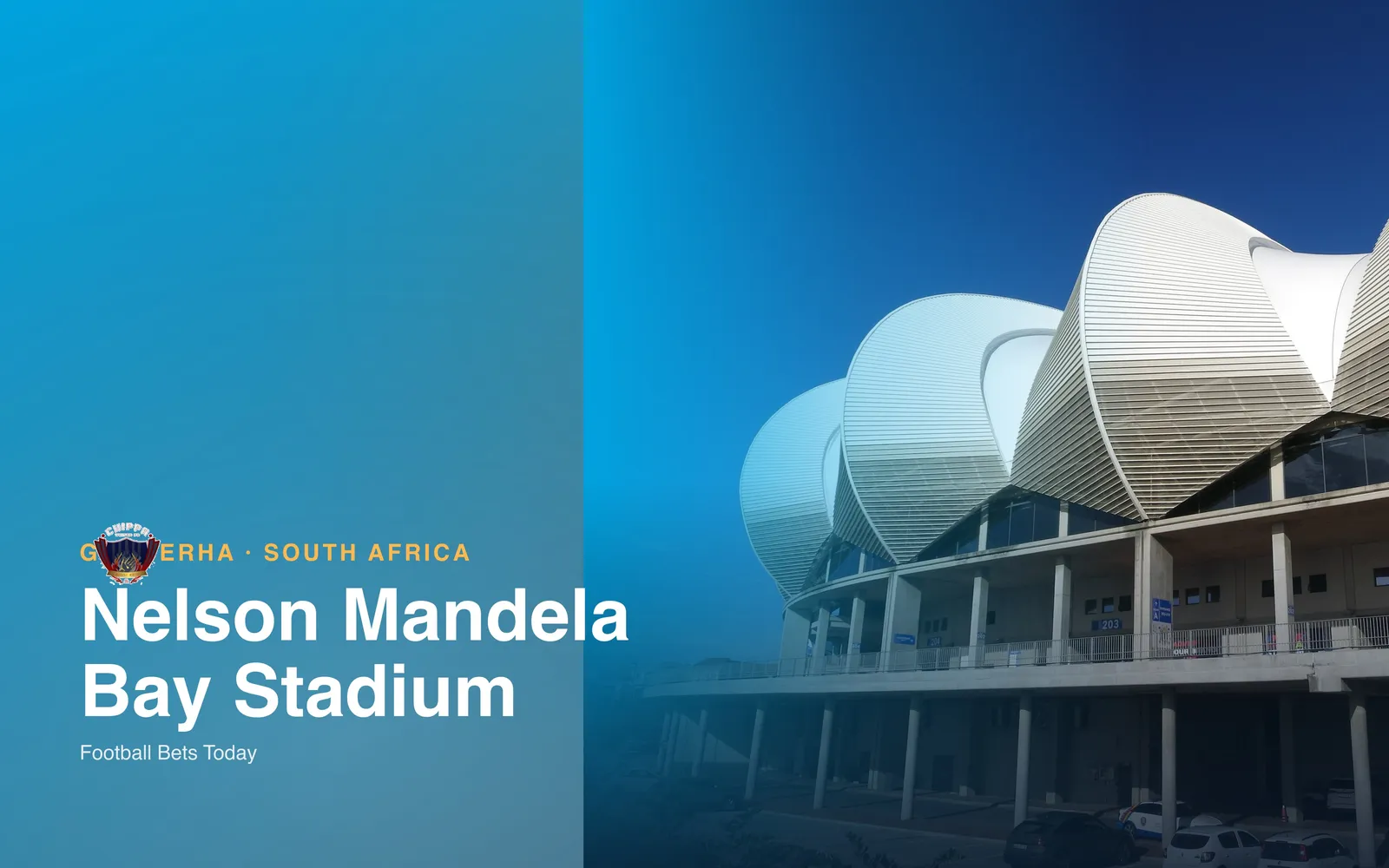
The ground
Facts
| Capacity | 46,000 |
|---|---|
| Opened | 2009 · renovated Built for the 2010 World Cup, with a World Cup capacity of 42,486 |
| Official name | Nelson Mandela Bay Stadium |
| Surface | hybrid |
| Owner | Nelson Mandela Bay Metropolitan Municipality (operated by Access Facilities and Leisure Management) |
| Record attendance | 45,800 · 2011 Vodacom Challenge. The source also gives 45,000 for an Eastern Province Currie Cup match in 2010, so the record is unclear. (2011) |
| Getting there | North End station (Metrorail), about 1.3 km away, and the city's BRT network. Algoa Bus Company runs extra stops on match days. |
History
Matches it is known for
- 2010 World Cup, eight matches including the third-place play-off
- 2013 Africa Cup of Nations, eight matches
- 2009 British & Irish Lions tour match
- 2011 Tri Nations Springboks v All Blacks
- Official opening 28 February 2010
In depth
About Nelson Mandela Bay Stadium
Key takeaways
- Nelson Mandela Bay Stadium is in North End, Gqeberha, in the Eastern Cape.
- The stadium holds about 46,000 spectators for regular sport, while its recorded 2010 World Cup capacity was 42,486.
- Chippa United have used the ground since 2014, alongside its rugby and international sporting uses.
- Check the confirmed venue and transport arrangements before travelling to a match.
Nelson Mandela Bay Stadium is a soccer and rugby ground in Gqeberha, in South Africa’s Eastern Cape. Opened in 2009, it holds about 46,000 spectators for regular sport and has been a home ground for Chippa United since 2014.
The ground carries both a World Cup story and an Eastern Cape identity. Its tournament history includes Ivory Coast holding Portugal in 2010 and Ghana beating Cape Verde in the 2013 AFCON quarter-final here. For a supporter planning a visit, though, the useful details start with the capacity, the address and the venue listed against the actual fixture.
What Is the Capacity of Nelson Mandela Bay Stadium?
Nelson Mandela Bay Stadium holds about 46,000 for regular soccer and rugby, while its recorded capacity for the 2010 World Cup was 42,486. These figures describe different event arrangements. The 2010 preparations also included 4,000 temporary seats.
The clearest answer is about 46,000 for regular use, with 42,486 attached specifically to the 2010 World Cup. For an individual match, consult the event’s seating plan to see which sections are available.
Capacity also differs from attendance: one describes how many spectators a configuration can accommodate, while the other records how many attended a particular event. When comparing Chippa United fixtures with the stadium’s tournament history, keep those measures separate. Neither capacity figure tells you how many tickets remain available.
| Figure | Context | Meaning |
|---|---|---|
| About 46,000 | Regular capacity | The general guide for soccer and rugby. |
| 42,486 | 2010 World Cup | The recorded capacity for that tournament’s configuration. |
Where Is the Stadium, and Who Plays There?
The stadium is at 70 Prince Alfred Road, North End, Gqeberha, in the Eastern Cape.
Chippa United have used the stadium as a PSL home since 2014, giving its soccer calendar a strong local connection. Southern Kings were tenants from 2013 to 2020, while Bafana Bafana and the Springboks have staged internationals here. Those associations explain the ground’s range, but they do not establish where any particular forthcoming fixture will be played.
For supporters following South African club soccer from elsewhere in Africa, distinguish the home team from the host venue. A club profile explains Chippa United’s identity; the fixture’s venue field identifies the destination. Read the competition and event details together, particularly when comparing domestic fixtures with internationals held at the same ground.
When Did Nelson Mandela Bay Stadium Open?
The stadium opened to the public on 6 June 2009, before its official opening on 28 February 2010. Its first match took place on 16 June 2009, when the British and Irish Lions beat Southern Kings by 20 points to eight. Those separate milestones explain why accounts can give different opening dates without describing different buildings. This was a new stadium developed for the 2010 World Cup.
It subsequently hosted eight matches at the 2010 World Cup and eight at AFCON in 2013. The World Cup allocation stretched from the group stage through to the third place play off, giving the Eastern Cape a substantial role in the 2010 World Cup. Bafana Bafana had already introduced international soccer to the ground with a goalless draw against Japan on 14 November 2009.
How Do You Get to Nelson Mandela Bay Stadium?
Use 70 Prince Alfred Road, North End, Gqeberha as your destination when planning the journey. Check the organiser’s transport information before choosing how to travel, and arrange your return journey before departure.
Begin with the fixture card’s venue and date before making travel bookings. Check entrance instructions alongside any event transport notices. For an evening match, settle the journey home as carefully as the journey to the turnstiles.
Separate arrival in Gqeberha from the final journey to your entrance. If travelling with companions, agree a meeting point and keep the address, ticket and return arrangements accessible. Anyone needing accessible seating or assistance should check the event’s arrangements before choosing a ticket, including the route from the arrival point to the allocated section.
Why Is It Called Nelson Mandela Bay Stadium?
The stadium takes its name from Nelson Mandela Bay Metropolitan Municipality, rather than being named directly after Nelson Mandela. That municipal connection helps place it within the wider Eastern Cape area, while Gqeberha identifies the city. Readers comparing South African soccer stadiums should keep both names in mind: a stadium name and a city name do not always describe the same geographical boundary.
For a visitor, the practical distinction is between the wider destination and the precise ground address. Use the full stadium name when checking an event, then match the street address to your journey details. This is especially useful when arranging accommodation and transport separately for a visit centred on South African soccer.
Which Matches Gave the Ground Its African Place?
Ivory Coast’s goalless draw with Portugal in 2010 is a central African chapter in the stadium’s World Cup history. The Netherlands later beat Brazil 2 to 1 here in the quarter final, before Germany defeated Uruguay 3 to 2 in the third place play off.
Ghana gave the ground another direct West African connection at AFCON in 2013, beating Cape Verde 2 to 0 in the quarter final. The Black Stars then returned for the third place play off, which Mali won 3 to 1. Those encounters make the venue more than a remembered World Cup backdrop for Ghanaian readers. Its rugby history also includes the Springboks drawing 14 all with England in 2012.
What Did the Stadium Cost, and What Is Its Design Like?
The stadium cost roughly R2 billion to build for the 2010 World Cup, although published totals differ.
Inside, the seating bowl accommodates both soccer and rugby, so the event layout matters when choosing a ticket. Use the seating map to compare your preferred view with the entrance printed on the ticket, and obtain tickets through the organiser’s announced channel. Allow time for entry procedures and finding your block. A stadium’s headline capacity tells you its scale; the ticket and event instructions tell you how to use it.
For soccer, consider which parts of the action you most want to follow. A view towards halfway helps you track both teams’ shape across the pitch, while a position behind a goal offers a different perspective on chances and goalkeeping. Compare the block and row together, and check any viewing restrictions stated for the seat.
What Should Supporters Check Before Watching or Travelling?
Base travel bookings on the ground named for the individual match. The fixture card shows where each match is played. Check that venue entry again before departure, alongside any update from the organiser. Chippa United’s association with this stadium provides historical context; each fixture supplies its own destination.
For viewers in Nigeria or Ghana, coverage information must match the territory where they will watch. The same check applies in Kenya, Uganda and South Africa, as broadcast rights vary by competition and country. Compare the listed kick off with WAT in Nigeria, EAT in Kenya and Uganda, SAST in South Africa and GMT in Ghana. Revisit the dated listing before making viewing arrangements.
When organising a shared viewing, write all four zones beside the confirmed time rather than forwarding an unlabelled hour. Keep the fixture date attached as well. For supporters following Chippa United or an African national side across borders, that makes the arrangement clear without assuming everyone is reading the listing in the same location.
FAQ
What is the capacity of Nelson Mandela Bay Stadium?
The regular capacity is about 46,000 spectators for soccer and rugby. Its recorded 2010 World Cup capacity was 42,486, reflecting that tournament’s configuration. Use the individual event’s seating plan when buying tickets.
Who plays at Nelson Mandela Bay Stadium?
Chippa United have used the stadium since 2014. Southern Kings used it from 2013 to 2020. Bafana Bafana and the Springboks have also played internationals at the venue.
How do I get to Nelson Mandela Bay Stadium?
Plan your route to 70 Prince Alfred Road, North End, Gqeberha. Confirm the match location before booking transport, then consult the organiser’s travel instructions and arrange a way home.
When did Nelson Mandela Bay Stadium open?
Public access began on 6 June 2009, with the official opening following on 28 February 2010. The first match was played on 16 June 2009, when the British and Irish Lions defeated Southern Kings 20 to 8.
Written by Thabo Mokoena, 2026-11-11.