
Manchester (Trafford), England · opened 1910
Capacity 74,158. Who plays here, the matches it is known for, and how to get there.
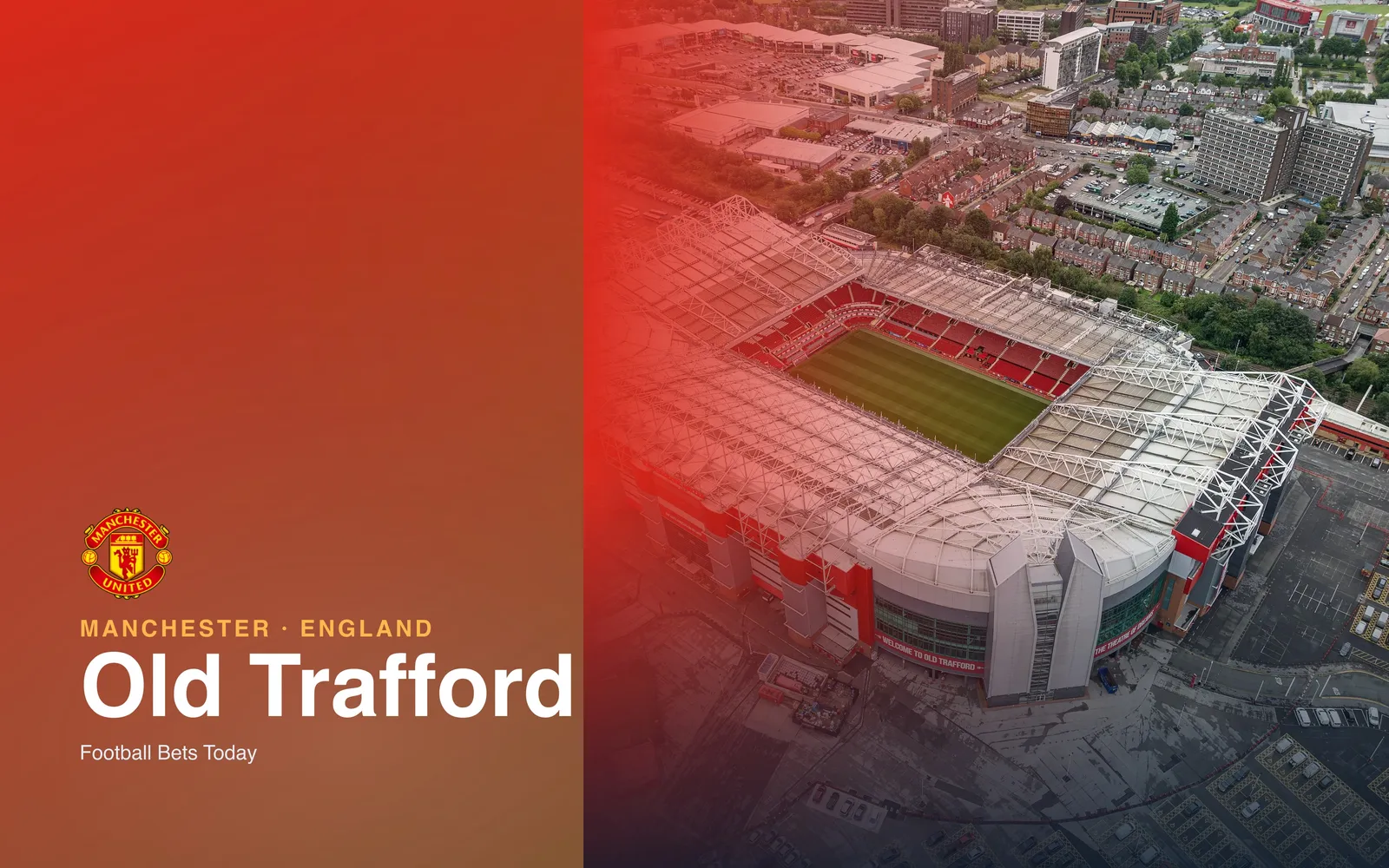
The ground
Facts
| Capacity | 74,158 |
|---|---|
| Opened | 1910 · renovated Rebuilt after wartime bombing and reopened in 1949, roofed by 1959; later expanded into an all-seater |
| Official name | Old Trafford |
| Surface | hybrid |
| Owner | Manchester United |
| Record attendance | 76,962 · 1939 FA Cup semi-final, Wolves v Grimsby Town. The all-seater record is 76,098 (v Blackburn, 2007). (1939) |
| Getting there | Manchester United Football Ground railway station is beside the ground. Metrolink stops Old Trafford, Wharfside and Exchange Quay are within about 10 minutes' walk. |
History
Matches it is known for
- 2003 UEFA Champions League final
- 1966 World Cup matches
- Euro 96 matches
- 2012 Olympic football
- Women's Euro 2022 opening match
- 2013 Rugby League World Cup final
In depth
About Old Trafford
Key takeaways
- Old Trafford is Manchester United's home ground in the Old Trafford area of Greater Manchester, and is nicknamed the Theatre of Dreams.
- Its capacity is roughly 74,000, a rounded figure that can change as seating arrangements are revised.
- Old Trafford, Wharfside and Exchange Quay tram stops offer walking routes to the stadium.
- The new stadium proposal announced in March 2025 envisaged a separate 100,000 seat home.
Old Trafford is the home of Manchester United in the Old Trafford area of Greater Manchester, England, nicknamed the Theatre of Dreams. As recorded in November 2026, Old Trafford stadium holds roughly 74,000 spectators, making it the largest club football stadium in the UK. For football supporters across Africa, including South Africans searching for soccer grounds, the name connects a familiar television setting with a place they might one day visit.
For a supporter leaving a Lagos viewing centre or planning a journey from Nairobi, the useful details begin beyond the television camera. Which tram stop serves your stand, and how does British summer time affect the match clock? Among football stadiums, Old Trafford carries an unusually familiar silhouette. Understanding its transport, history and African connections makes that familiarity more useful.
What Is the Capacity of Old Trafford?
Old Trafford has a rounded capacity of about 74,000, based on the November 2026 reference figure of 74,158. Treat that as a dated seating figure, because alterations and event layouts can revise the total. The seating capacity also differs from the number of tickets available for a particular match. The event details and records module provide the context when an exact figure matters to your plans.
The stadium attendance record belongs to an FA Cup semi final in 1939, when 76,962 watched Wolverhampton Wanderers against Grimsby Town. Its all seater record was 76,098 for United against Blackburn Rovers in 2007. Those historical crowds reflect different ground arrangements, so neither should be read as the number of seats available now. The dates are part of the record, just as much as the attendance.
Who Plays at Old Trafford?
Manchester United's men's team are Old Trafford's main tenant, with home fixtures across domestic and European competitions when qualified. The opening match of Women's Euro 2022 and rugby league fixtures have also brought different teams and audiences into the ground. Read the competition alongside the team names in the fixtures module: an international, a club match and a rugby league final each have their own ticket arrangements and stadium instructions.
How Do I Get to Old Trafford?
Metrolink provides practical approaches through Old Trafford, Wharfside and Exchange Quay, each within roughly ten minutes' walk of the ground. The best choice depends on your arrival route and entrance, so check the walking directions against your ticket. Allow extra time for crowds and entry checks. A stop that looks slightly further away on a map can still suit the side of the stadium you need.
Manchester United Football Ground railway station sits beside the Sir Bobby Charlton Stand, so use the public transport journey planner to confirm matchday services. If you are flying in from Africa, leave a generous gap between landing and stadium arrival, and confirm the fixture date before committing to travel. Airport arrival time is only the beginning of the journey.
Why Is Old Trafford Called the Theatre of Dreams?
The Theatre of Dreams nickname is credited to Bobby Charlton, expressing the ambition and possibility associated with playing at Old Trafford. It is a nickname for the ground, rather than a separate stadium name. For supporters in Accra or Kampala, it gives a familiar phrase to the same scene seen on television: the players emerging, the stands rising behind them and a match still waiting to find its defining moment.
The opening fixture supplies a useful reminder that the ground's story has always belonged to football itself. On 19 February 1910, United hosted Liverpool and lost by four goals to three, with Sandy Turnbull scoring the first goal at the stadium. A famous address could not decide the result. That opening afternoon remains a better introduction than a slogan, because it connects the ground's first crowd with a result preserved in the record book.
How Did Old Trafford Grow Through War and Rebuilding?
Old Trafford opened in 1910 after construction began in 1909 to designs by architect Archibald Leitch. Its history then became one of rebuilding as well as expansion. Bombing in December 1940 and March 1941 damaged the ground and destroyed the main stand, forcing United to share Manchester City's Maine Road. The return came on 24 August 1949, with a home victory by three goals to nil against Bolton Wanderers.
Further work changed both the scale and the spectator experience as the ground developed into an all seater stadium. The North Stand rebuild of 1995 and 1996 forms another important stage in that development. The timeline traces how the ground recovered from wartime damage and grew into the stadium familiar from Premier League broadcasts.
| Year | Milestone |
|---|---|
| 1910 | Opened on 19 February with Manchester United against Liverpool. |
| 1940 and 1941 | Wartime bombing damaged the stadium, leading to the Maine Road ground share. |
| 1949 | United returned on 24 August against Bolton Wanderers. |
| 1966 | Hosted World Cup group matches. |
| 1996 | Hosted European Championship fixtures through the semi finals. |
| 2003 | Staged the Champions League final between AC Milan and Juventus. |
| 2012 | Hosted men's and women's Olympic football. |
| 2022 | Hosted the Women's European Championship opening match. |
| 2025 | Plans for a new 100,000 seat stadium were announced in March. |
Which Major Football Events Has Old Trafford Hosted?
Old Trafford has hosted World Cup, European Championship, Olympic and Champions League football alongside United's matches. The 2003 Champions League final between AC Milan and Juventus is the defining European club occasion here. Its international tournament history includes group matches at the 1966 World Cup and fixtures through the semi final stage at Euro 96. Those events make the stadium part of football history beyond its principal tenant.
Men's and women's Olympic football followed in 2012, while England against Austria opened Women's Euro 2022 before 68,871 spectators. Rugby league supplies another strand, including the World Cup final in 2013. These occasions explain why Old Trafford's event history spans several sports and competitions. The event name provides essential context when comparing attendance records or planning a visit around a fixture.
What Are the Four Stands Called?
The four stands are the Sir Alex Ferguson Stand to the north, the East Stand, the Sir Bobby Charlton Stand to the south and the West Stand, commonly called the Stretford End. Ferguson's name honours United's former manager; Charlton's honours the former player associated with the Theatre of Dreams nickname. For visitors, the practical distinction is your entrance: use the stand and access information printed on your ticket when choosing your approach.
What Would a New Stadium Mean for Old Trafford?
The proposal announced in March 2025 envisaged a new 100,000 seat stadium, making the future of the existing Old Trafford a separate question from its history. An announcement does not establish an opening date or settle every detail of the old ground's future. Keep the proposal's date attached to the capacity figure, and base travel plans on dated updates about any move or change to visitor access.
How Should Fans Visiting From Africa Plan Tickets and Tours?
A match ticket and a stadium tour are separate bookings, so decide which experience you want before arranging your visit. Review the named event, seat location, entry conditions and any membership requirements attached to the allocation. For a tour, confirm the route and access arrangements for your chosen date. Stadium operations can affect what visitors see, and a tour booking should never be read as admission to a match.
How Do Supporters Across the Five Countries Follow Old Trafford?
Supporters in Nigeria, Kenya, South Africa, Ghana and Uganda follow Old Trafford matches through broadcasts and shared viewing venues. Use the fixture module for the confirmed date, competition and local kick off, then check viewing information for your country. Ghana stays on GMT, Nigeria uses WAT, South Africa uses SAST, and Kenya and Uganda use EAT. Britain's seasonal clock change alters the difference, while those African time zones remain unchanged.
The player connections need equally careful dates. South Africa's Quinton Fortune joined United in 1999 after the Treble campaign, and his spell ran until 2006. Kobbie Mainoo, who has Ghanaian heritage, scored for United in the 2024 FA Cup final. Nigeria's Odion Ighalo played for United on loan from 2020 to 2021. Those dated connections give supporters lasting points of reference; the fixture module supplies viewing times in WAT, EAT, SAST and GMT.
FAQ
What is the capacity of Old Trafford?
Old Trafford holds roughly 74,000 spectators, using the November 2026 reference figure of 74,158. This is a rounded capacity guide, and seating changes or event arrangements can revise the figure.
Who plays at Old Trafford?
Manchester United's men's team are the main tenant at Old Trafford. The stadium has also hosted the opening match of Women's Euro 2022 and rugby league fixtures, alongside major international tournaments.
How do I get to Old Trafford?
Old Trafford, Wharfside and Exchange Quay Metrolink stops are within roughly ten minutes' walk. Manchester United Football Ground railway station sits beside the Sir Bobby Charlton Stand, so check the journey planner for matchday services. Before travelling, match your route to the entrance shown on your ticket.
Why is Old Trafford called the Theatre of Dreams?
The Theatre of Dreams nickname is credited to Bobby Charlton and expresses the ambition and possibility associated with playing at Old Trafford. It refers to the same ground, rather than a separate stadium.
Written by Tunde Akinwande, 2026-11-11.