
Paris, France · opened 1972
Capacity 47,929. Who plays here, the matches it is known for, and how to get there.
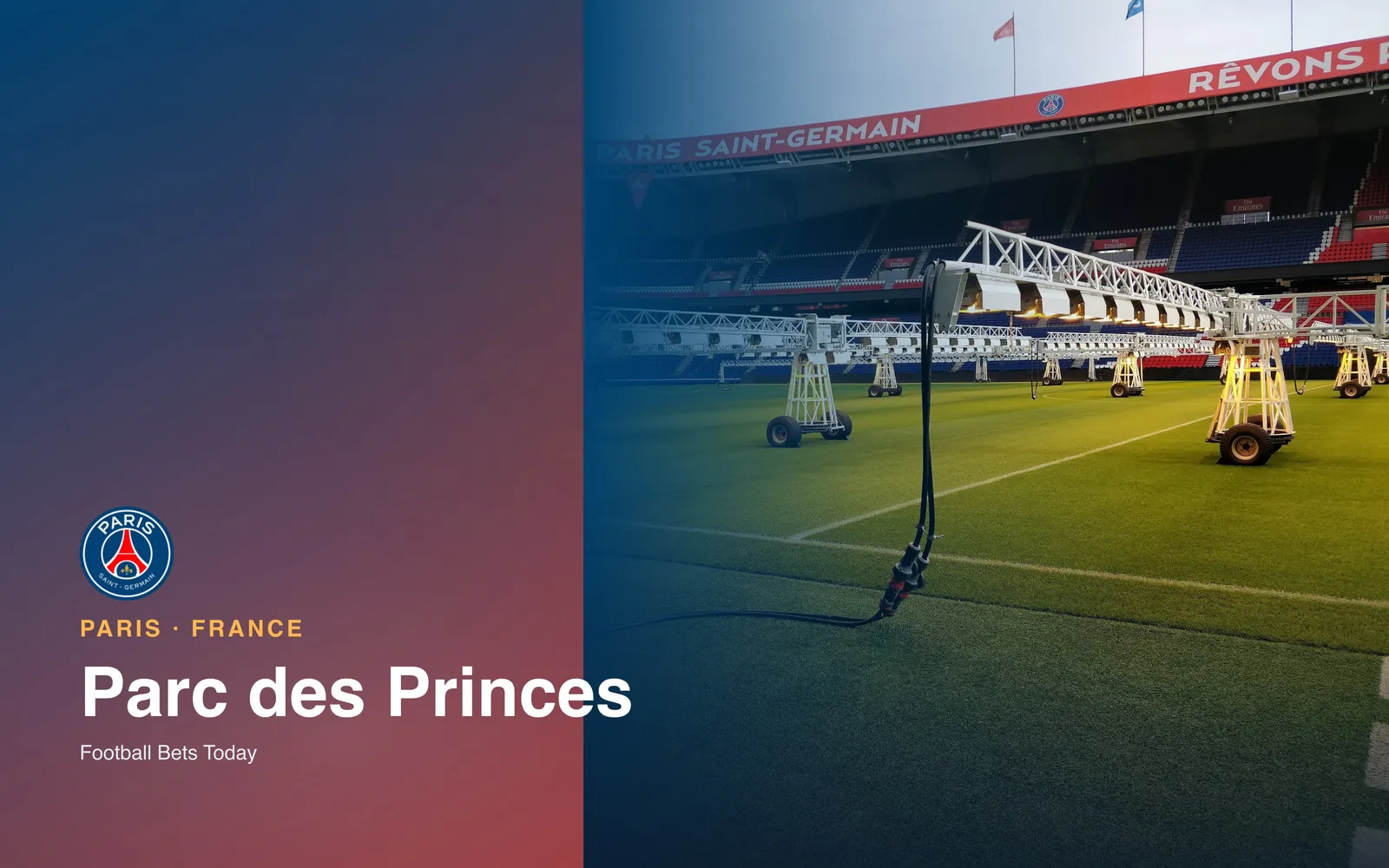
The ground
Facts
| Capacity | 47,929 |
|---|---|
| Opened | 1972 · renovated Rebuilt 1967–1972; renovated before Euro 2016. The site first opened as a velodrome in 1897. |
| Official name | Parc des Princes |
| Surface | grass |
| Owner | City of Paris |
| Record attendance | 50,370 · France v Wales (rugby union) (1989) |
| Getting there | Porte de Saint-Cloud (Metro Line 9) and Porte d'Auteuil (Line 10) are nearby, beside the Boulevard Périphérique in the 16th arrondissement. |
History
Matches it is known for
- 1938 and 1998 FIFA World Cup matches
- European Cup finals 1975 and 1981
- UEFA Euro 1984 final
- UEFA Euro 2016
- 2019 Women's World Cup
- 2024 Olympic football finals
In depth
About Parc des Princes
Key takeaways
- Parc des Princes is Paris Saint-Germain's home ground in western Paris, near Roland-Garros.
- The stadium holds about 48,000 spectators.
- Porte de Saint-Cloud and Porte d'Auteuil are the main Metro stops for reaching the ground.
- Jay-Jay Okocha and George Weah give Le Parc a lasting place in African football memory.
- Ghana uses GMT, so Accra and Lagos have different kick-off times.
Parc des Princes is a football stadium in the 16th arrondissement of Paris, near Roland-Garros, and Paris Saint-Germain's home since 1974. It holds about 48,000 spectators, making this Paris ground familiar to football and soccer followers across Africa. For Nigerian readers, the connection runs through Jay-Jay Okocha, whose PSG years from 1998 to 2002 gave the stadium a place in conversations far beyond France.
Understanding Le Parc means connecting the journey to the ground with its football history. A stadium can look straightforward on television and feel rather different when everyone leaves through the same station entrance. The practical questions come first here: which seats the capacity describes, who plays on the grass, and how to reach your entrance before settling into the stories behind the ground.
What Is the Capacity of Parc des Princes?
Parc des Princes has about 48,000 seats in its modern configuration, within the stadium opened in 1972. Your ticket category and the arrangements for the particular match determine what you can book.
The reported record attendance belongs to a different configuration: 50,370 watched France play Wales in rugby union in 1989. That historical crowd should not be mistaken for present seating capacity. When comparing football stadiums, distinguish a record crowd from the seats available for a particular event.
Who Plays Football at Parc des Princes?
Paris Saint-Germain have used Parc des Princes as their home since 1974. Their regular home programme includes domestic football and European competition, including the Champions League when qualified. Jay-Jay Okocha played home matches here during his PSG years from 1998 to 2002, giving Nigerian supporters a lasting connection to the ground. France internationals and other cup fixtures also belong to the stadium's history, although the national team does not use it as its principal home. Always read the venue beside a fixture, especially for finals and matches staged elsewhere.
How Do You Get to Parc des Princes?
Metro line 9 to Porte de Saint-Cloud or line 10 to Porte d'Auteuil provides the usual approach to Parc des Princes. Allow roughly ten minutes on foot from either station, with extra time for your entrance and the crowd. Michel-Ange-Molitor, served by lines 9 and 10, offers another approach, generally involving a slightly longer walk. Roland-Garros helps you place the district on a map, but follow signs towards the football ground and your assigned gate.
From Charles de Gaulle airport, take RER B towards Paris, leave at Saint-Michel Notre-Dame and follow the connection towards Cluny-La Sorbonne for line 10. Check the westbound destination carefully because line 10 branches, then use a service calling at Porte d'Auteuil. From central Paris, a direct journey on line 9 or line 10 may be simpler. Leave a generous arrival margin, keep your ticket accessible and expect queues afterwards. Check public transport service alerts and the Paris public authority's travel information before departure.
What Does Le Parc Mean to Its Supporters?
Le Parc simply means “the park”, shortening Parc des Princes, or “Park of the Princes”. For supporters, however, the name now carries the sound and colour of a football home. Choose your section with the atmosphere you want in mind.
For African readers, that identity has familiar faces. George Weah played for PSG from 1992 to 1995 and became the first African Ballon d'Or winner in 1995. Okocha followed from 1998 to 2002, bringing a direct Super Eagles connection. Those connections make Le Parc more than a television backdrop: families can recognise different chapters through the players they followed.
How Did Parc des Princes Become PSG's Home?
The site opened as a cycling velodrome in 1897, before the football stadium took its present shape under architect Roger Taillibert in 1972. The Tour de France finished here in most years from 1903 until 1967, giving the location a sporting identity before PSG arrived in 1974. The central change was the rebuilding, rather than a new name. Its sweeping concrete structure replaced the earlier ground while retaining Parc des Princes.
That distinction helps when reading stadium records: a match at Parc des Princes before 1972 happened at an earlier version of the ground. Among football stadiums, Le Parc offers an unusually clear lesson in separating a historic site from its surviving structure. The cycling finishes and Okocha's PSG years from 1998 to 2002 share a location, but they belong to different stages of its development.
Which Finals Made Parc des Princes Famous?
Parc des Princes hosted the first European Cup final in 1956, when Real Madrid beat Stade de Reims 4 to 3. That is the defining match in its wider football history: a competition now followed in African viewing centres began its finals story here. The Soviet Union then beat Yugoslavia after extra time in the first European Championship final in 1960. Both matches took place before Taillibert's rebuilt stadium opened.
The later ground hosted Liverpool's European Cup final victory over Real Madrid in 1981, decided by Alan Kennedy's goal. France beat Spain in the Euro 1984 final, with Michel Platini and Bruno Bellone scoring. In 2024, Spain defeated France after extra time in the men's Olympic football final, and the United States beat Brazil in the women's final. These were international occasions at PSG's home, separate from the club's own home fixture programme.
How Should You Plan Tickets and a Stadium Tour?
Match tickets and stadium tours require separate planning, because a tour booking does not include admission to a match. From Africa, confirm the fixture date and venue before committing to flights or accommodation, then check the ticket arrangements, identification requirements and entrance instructions for that event. Tours may offer a different view of the stadium, but access depends on the day's programme. Keep travel flexible around any fixture whose scheduling remains provisional.
How Do Fans Across Africa Follow Matches at Le Parc?
Choosing where to watch Le Parc football starts with matching the competition to its broadcaster in your country and converting the Paris start into your local hour. Ligue 1, Champions League and cup coverage can have different rights arrangements, so check the country viewing information attached to the fixture. The fixtures and results modules distinguish scheduled matches from completed games; a displayed result does not mean a live broadcast is about to begin.
Paris changes its clocks seasonally, while the African cities listed below keep the same time throughout the year. Lagos uses WAT, Accra uses GMT, Johannesburg uses SAST, and Nairobi and Kampala use EAT. For a viewing centre gathering, check the date as carefully as the hour, particularly when arranging transport home. The example below converts an evening Paris start in both clock periods; it is an illustration, not an announced fixture.
| Paris Clock Period | Nigeria, WAT | Ghana, GMT | South Africa, SAST | Kenya And Uganda, EAT |
|---|---|---|---|---|
| Summer time | 20:00 | 19:00 | 21:00 | 22:00 |
| Winter time | 21:00 | 20:00 | 22:00 | 23:00 |
Could PSG Leave Parc des Princes?
PSG's long term stadium plans depend on decisions about ownership, development and possible alternatives. In 2024, the City of Paris refused to sell the ground and kept the stadium in city ownership. That dated disagreement does not establish a departure date or a completed move. Before booking a visit, check the venue on the actual fixture and read dated news reporting for any confirmed change to the stadium arrangements.
FAQ
What is the capacity of Parc des Princes?
Parc des Princes holds about 48,000 spectators. Check the ticket arrangements for the particular match to see which seats are available.
Who plays at Parc des Princes?
Paris Saint-Germain play their regular home matches at Parc des Princes, their home since 1974. The stadium also has a history of France internationals, cup fixtures and international tournament matches.
How do I get to Parc des Princes?
Use Metro line 9 to Porte de Saint-Cloud or line 10 to Porte d'Auteuil, then walk to your entrance. Michel-Ange-Molitor offers another nearby option. Check service alerts and allow extra walking time for matchday crowds.
What does Parc des Princes mean?
Parc des Princes means “Park of the Princes”. Its shortened name, Le Parc, means “the park”.
Written by Tunde Akinwande, 2026-11-11.