
Leipzig, Germany · opened 2004
Capacity 47,069. Who plays here, the matches it is known for, and how to get there.
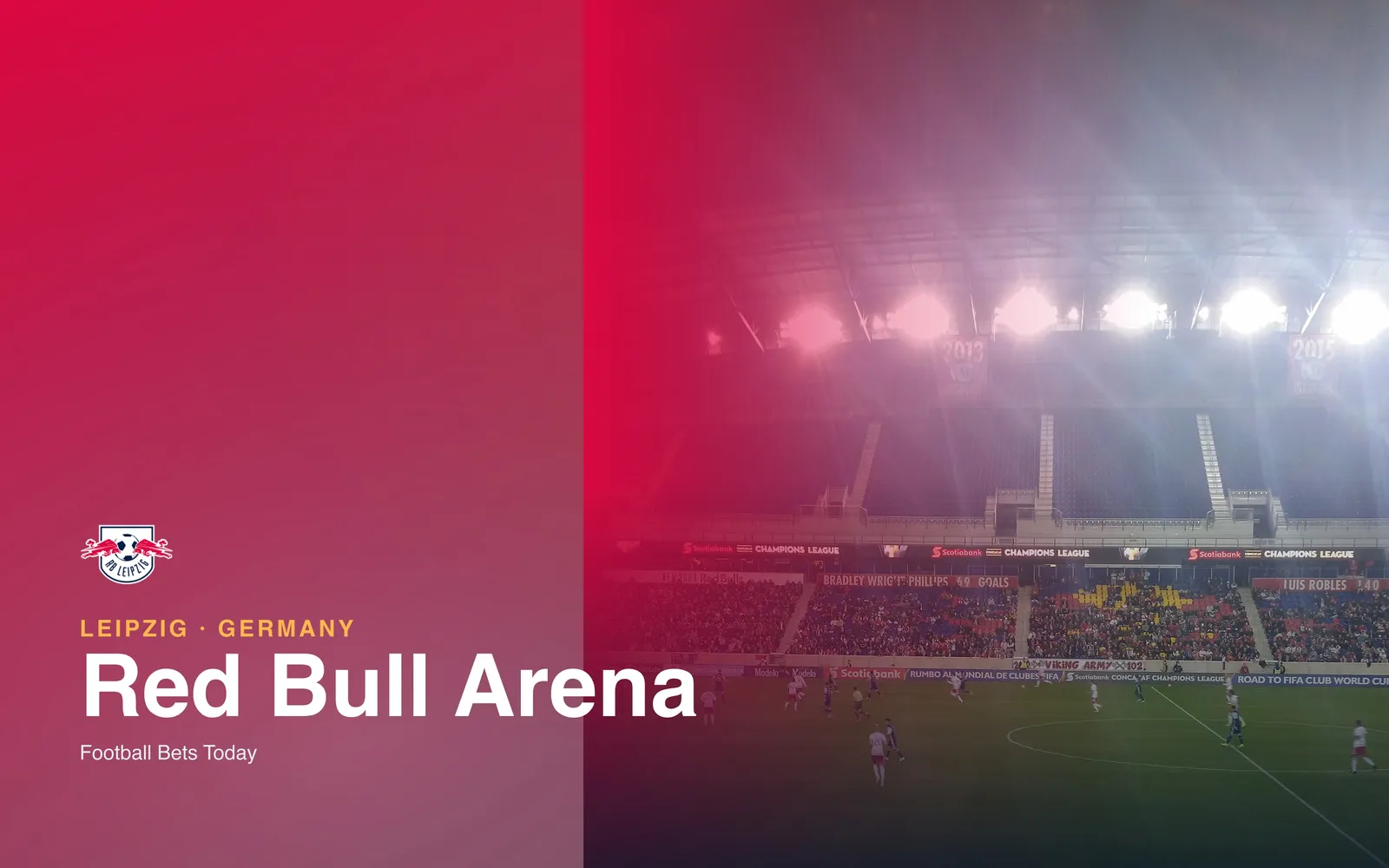
The ground
Facts
| Capacity | 47,069 |
|---|---|
| Opened | 2004 |
| Official name | Red Bull Arena, since 2010 (opened as Zentralstadion) |
| Surface | grass |
| Owner | RB Leipzig (not verified) |
| Getting there | Tram lines from Leipzig Hauptbahnhof to Waldstraße or Sportforum; the ground sits next to the city centre, west of the Elster canal. |
History
Matches it is known for
- 2005 Confederations Cup matches
- 2006 FIFA World Cup matches
- RB Leipzig's Bundesliga and Champions League home games
In depth
About Red Bull Arena
Key takeaways
- The capacity listed for 2026 is about 47,800 for league matches and 45,228 for international matches.
- The Red Bull Arena name dates from 2010, and RB Leipzig, founded in 2009, are the club associated with it.
- The modern stadium stands inside the bowl of the original Zentralstadion, which opened in 1956.
- Angola drew one all with Iran in Leipzig on 21 June 2006 at the World Cup.
Red Bull Arena is a football stadium in Leipzig, Germany, with a listed 2026 capacity of about 47,800 for league matches and 45,228 for international matches. It has carried the Red Bull Arena name since 2010 and is associated with RB Leipzig, founded in 2009, making it a familiar ground for football and soccer followers across Africa.
For an African supporter, the strongest connection reaches beyond the club shirt: Angola played a World Cup match here in 2006. Understanding this ground means keeping its different capacities and names straight, then looking at the football played inside it. Zentralstadion still appears in older reports because it was the name of the original stadium that opened in 1956, and the modern ground was built inside its bowl.
What Is the Capacity of Red Bull Arena?
Red Bull Arena’s listed capacity in 2026 is about 47,800 for league matches and 45,228 for international matches. Those figures describe different event arrangements, so the larger number should not be attached automatically to every fixture. When choosing seats, use the seating plan issued for that particular match. The competition and available sections matter more to your visit than a single capacity figure copied into a travel itinerary.
The original Zentralstadion could accommodate 100,000 spectators when it opened in 1956, but that belongs to the older stadium’s history. It is neither the capacity of the modern ground nor an attendance record for the present arena. Keeping those distinctions clear helps explain why descriptions of Leipzig’s stadium can contain very different numbers without referring to the same building or event layout.
| Match Category | Capacity |
|---|---|
| League matches | About 47,800 |
| International matches | 45,228 |
Who Plays at the Leipzig Stadium?
The Red Bull Arena name dates from 2010, and RB Leipzig, founded in 2009, are the club associated with it. The club name tells you only part of the programme: a league fixture and an international can bring different ticket allocations and event arrangements. Read the competition label alongside the teams when checking the fixtures module.
Leipzig’s club story gives the modern ground much of its football identity. RB Leipzig reached the Bundesliga in 2016 and the Champions League semi finals in 2020, before winning the German cup in 2022 and 2023. Supporters in Nigeria, Kenya, South Africa, Ghana and Uganda who follow the Bundesliga can place RB Leipzig’s home in that league context, while Angola’s World Cup appearance in 2006 supplies the stadium’s lasting African connection without relying on a changing club squad.
Why Is It Also Called Zentralstadion or Leipzig Stadium?
Zentralstadion is the stadium’s original name. The ground became Red Bull Arena in 2010, following the naming agreement announced that year. Older match reports therefore use a name that remains useful when searching for its World Cup history. A reader looking up Angola’s visit should follow the city and match date as well as the stadium name.
The Zentralstadion and Red Bull Arena names describe the same site in Leipzig, not separate grounds. Before booking accommodation or arranging a meeting point, match the venue name to the address given in the event information. Our guide to football stadiums provides a wider starting point for comparing grounds and understanding why tournament names sometimes differ from familiar club names.
How Do I Get to Red Bull Arena?
Confirm the stadium address in the event information for your match, then check Leipzig’s public transport journey planner for the service operating on your match date. Confirm the arrival stop and the walking route to your entrance together, because reaching the stadium area and reaching your allocated gate are separate parts of the trip.
For a visit from Africa, compare flight options into Germany and include the onward rail or road journey to Leipzig in your total travel time. Allow for baggage collection and a delayed arrival when judging a connection. For walking from central Leipzig, use a current route planner rather than assuming that a short distance on the map means an equally direct approach.
How Was the Modern Ground Built Inside Zentralstadion?
The modern stadium was built inside the bowl of the Zentralstadion that opened in 1956, preserving a physical connection between the two grounds. Construction ran from December 2000 to March 2004, and the new stadium opened on 17 November 2004. The older bowl is therefore part of the setting rather than simply a name inherited from a demolished predecessor. That relationship is the most distinctive feature of Leipzig’s stadium history.
The modern construction’s listed cost was €116 million, and its roof forms a prominent part of the design. The pitch measures 105 × 68 metres, while the roof rises to 46.5 metres and covers 28,100 square metres. These measurements describe the structure, rather than the view from every seat. For a visit, the useful detail remains the position of your section and whether its access suits your needs.
Which Big Matches Give Leipzig Its African Connection?
Angola’s one all draw with Iran on 21 June 2006 is Leipzig’s defining African World Cup fixture. It gives supporters from across the continent a direct reason to place this ground in their tournament memory. Leipzig was the only venue in former East Germany used at the 2006 World Cup, staging four group matches and a round of 16 tie. Argentina beat Mexico by two goals to one after extra time in that knockout match on 24 June 2006.
The stadium had already hosted three Confederations Cup matches in 2005, including the third place match. Euro 2024 brought another major tournament programme, including Netherlands against France and Austria’s round of 16 meeting with Turkey. The ground also staged the Conference League final on 27 May 2026. Together, those events explain why Leipzig belongs in conversations about international tournament grounds as well as Bundesliga away trips.
What Should Visitors Know About Tickets and the Ground?
Choose tickets for the specific event and section, then read the entry instructions attached to your booking. Check whether the ticket describes a seated or standing area, especially when comparing a league match with an international. Supporters travelling together should confirm their sections before paying. A stadium capacity tells you the overall scale of the occasion, but the ticket category determines where you enter and how you experience the match.
For football, consult the event information for roof coverage and accessibility. When arranging collection afterwards, choose a meeting point outside the immediate entrance area and agree it before your group separates.
How Can Fans Across Africa Follow Matches in Leipzig?
Viewers from Lagos to Nairobi, Johannesburg, Accra and Kampala ought to check the viewing information for the competition attached to each fixture. Bundesliga, European club football and Germany internationals can have different broadcast arrangements. Use the viewing module for the relevant country and match, then check that your chosen service carries that event. The results module records completed games; the fixtures module gives the date and local viewing time for scheduled matches.
Read kick off times in WAT for Nigeria, EAT for Kenya and Uganda, SAST for South Africa, and GMT for Ghana together. Germany changes its clocks seasonally, so its time difference from each African market needs checking against the match date. A European evening listing should never be treated as your local start time. Before setting off for a viewing centre or arranging a stream, confirm the country label and date beside the fixture.
FAQ
What is the capacity of Red Bull Arena?
The listed 2026 capacity is about 47,800 for league matches and 45,228 for international matches. Check the seating plan for your event because the applicable arrangement depends on the fixture.
Who plays at Red Bull Arena?
The ground has carried the Red Bull Arena name since 2010, and RB Leipzig, founded in 2009, are the club associated with it. Check the competition label on the fixtures module to see which match is being staged.
How do I get to Red Bull Arena?
Confirm the stadium address in the event information for your match, then check Leipzig’s public transport journey planner for your match date, including the arrival stop, entrance and return journey.
Why is Red Bull Arena also called Zentralstadion?
Zentralstadion was the name of the original stadium, which opened in 1956. The modern ground was built inside its bowl and became Red Bull Arena in 2010, so older reports still use the earlier name.
Did Angola play at Red Bull Arena?
Yes. Angola drew one all with Iran in Leipzig on 21 June 2006 at the World Cup, which is the stadium’s defining African connection.
Written by Tunde Akinwande, 2026-11-11.