
Madrid, Spain · opened 1947
Capacity 83,186. Who plays here, the matches it is known for, and how to get there.
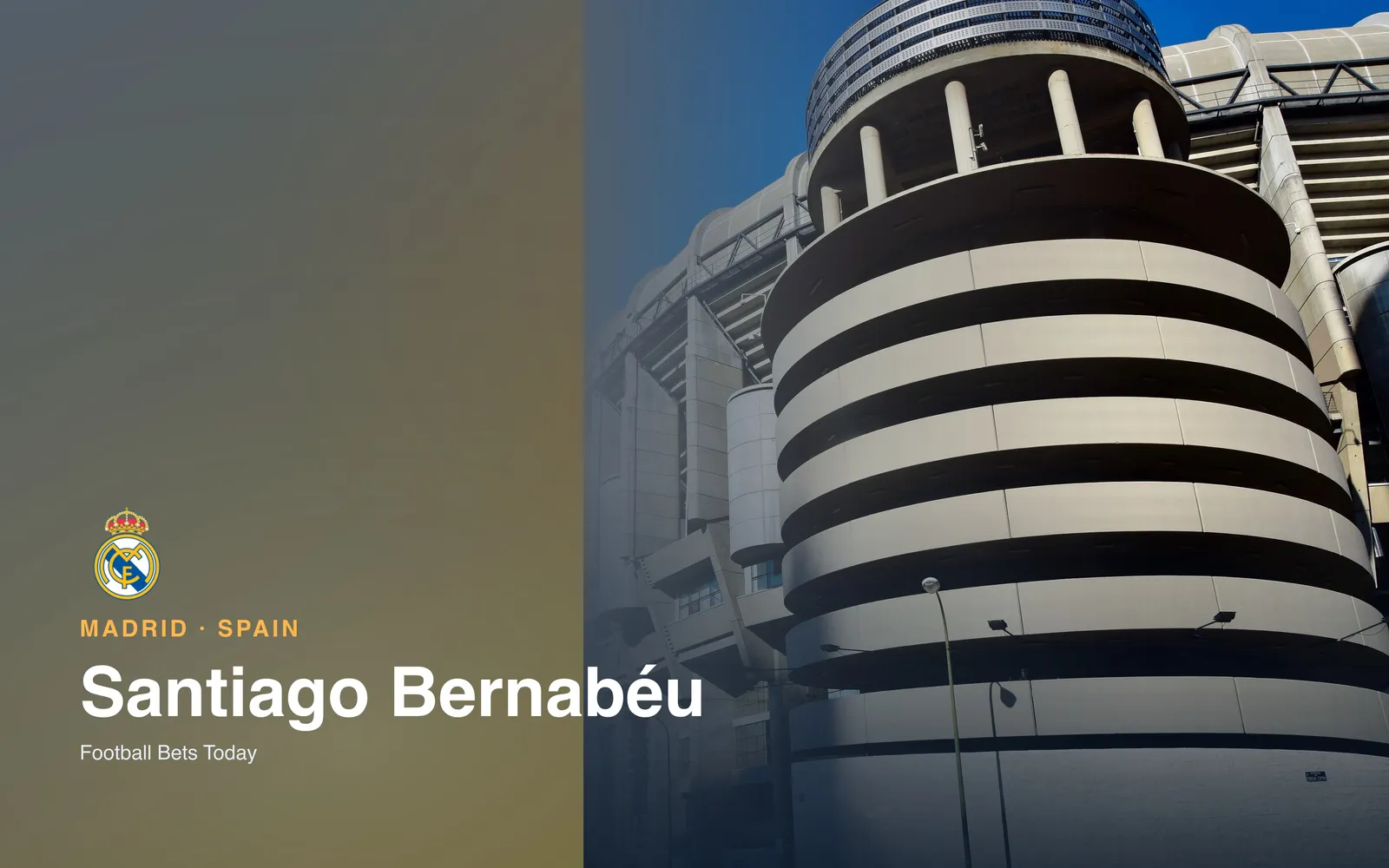
The ground
Facts
| Capacity | 83,186 |
|---|---|
| Opened | 1947 · renovated 1982, 2001 and 2019–2024 (reopened Dec 2023) |
| Official name | Estadio Santiago Bernabéu (named so since 1955; earlier Estadio Real Madrid Club de Fútbol, 1947–1955) |
| Surface | hybrid |
| Owner | Real Madrid CF |
| Record attendance | 129,690 · Real Madrid v AC Milan (European Cup) (1956) |
| Getting there | Santiago Bernabéu station on Madrid Metro Line 10, on Paseo de la Castellana, plus several EMT bus routes. |
History
Matches it is known for
- European Cup/Champions League finals 1957, 1969, 1980 and 2010
- 1964 European Nations' Cup final
- 1982 FIFA World Cup final
- 2018 Copa Libertadores final, second leg
- Pope John Paul II addressed about 160,000 young people, 1982
- First NFL game there, 2025
In depth
About Santiago Bernabéu
Key takeaways
- Santiago Bernabéu is Real Madrid's home stadium in the Chamartín district of Madrid.
- The stadium reopened on 23 December 2023 with a capacity of 83,186, while its attendance record belongs to the standing terrace era.
- Santiago Bernabéu station on Metro Line 10 serves the stadium.
- Nigerian internationals Finidi George and Nwankwo Kanu played there with Ajax in 1995.
Santiago Bernabéu is the home football stadium of Real Madrid, in the Chamartín district of Madrid, Spain. It reopened on 23 December 2023 with a capacity of 83,186, and football and soccer fans will recognise it as the ground behind many of Madrid's European nights.
For supporters in Lagos, Nairobi, Johannesburg, Accra and Kampala, the Bernabéu often arrives first through a television screen. Visiting puts the familiar camera angle into a real neighbourhood, with busy pavements and a particular entrance to find. Nigerian, Ghanaian and Kenyan viewers following Madrid's European nights on television can use the transport guidance to plan a visit to the ground they recognise.
What Is the Santiago Bernabéu Stadium Capacity?
The Santiago Bernabéu stadium capacity is 83,186; the ground reopened on 23 December 2023. Older figures describe different versions of the ground, rather than necessarily contradicting that total. It opened on 14 December 1947 with room for 75,145 spectators, including 27,645 seats. The remainder largely watched from standing areas, which explains how the stadium could later accommodate crowds much larger than its modern seated capacity.
Capacity reached 125,000 after the 1955 expansion, then fell as seating and stadium requirements changed. The all seated configuration introduced in 1997 held 74,328. Its record attendance remains 129,690 for Real Madrid against AC Milan on 19 April 1956, during the European Cup campaign. Keep that historical crowd separate from the capacity when judging the scale of the ground or planning a visit.
| Year | Capacity | Stadium configuration |
|---|---|---|
| 1947 | 75,145 | Opening capacity, including 27,645 seats |
| 1955 | 125,000 | Expanded stadium with standing areas |
| 1997 | 74,328 | All seated configuration |
| 2023 | 83,186 | Capacity following redevelopment |
Why Is It Called Santiago Bernabéu?
The ground is named after Santiago Bernabéu, the former Real Madrid player and president whose name it adopted on 4 January 1955. Bernabéu lived from 1895 to 1978 and became closely associated with the club's development into a European force. The full stadium name is Estadio Santiago Bernabéu, although Bernabéu is enough in most football conversations. Bernabeu, without the accent, is the same name.
Before the renaming, supporters knew the ground as Nuevo Estadio Chamartín, connecting it to its Madrid neighbourhood and distinguishing it from the earlier Chamartín ground. Architects Manuel Muñoz Monasterio and Luis Alemany Soler designed the stadium that opened in 1947. Those names explain the original building; the curved exterior familiar from photographs belongs to a much later chapter of its architectural history.
How Do You Get to Santiago Bernabéu?
Santiago Bernabéu station on Madrid Metro Line 10 is the simplest landmark for reaching the stadium by public transport. The address is Avenida de Concha Espina, beside Paseo de la Castellana. From central Madrid, reach Line 10 through an interchange such as Tribunal or Plaza de España, then travel towards Santiago Bernabéu. Check the direction and service information before boarding, particularly when engineering work changes the usual route.
From Barajas airport, take Metro Line 8 to Nuevos Ministerios, then change to Line 10 towards Santiago Bernabéu. From Nuevos Ministerios, walking north along Paseo de la Castellana is another option if your luggage and mobility allow. Municipal buses also serve the surrounding avenues. On matchday, check your entrance before joining a queue and follow signs around the stadium perimeter; the nearest station exit may leave you on the opposite side.
What Changed During the Bernabéu Rebuild?
The redevelopment from 2019 to 2024 gave the Bernabéu a new exterior and reworked its hospitality spaces. The redevelopment cost about €1.76 billion. The stadium reopened on 23 December 2023, although work continued into 2024. That distinction explains why accounts of the project can attach different dates to its return and completion.
For supporters, the changes extend beyond the exterior visible on television. Circulation areas and hospitality spaces were reworked. The retractable roof dates from the 1992 to 1994 renovation. When choosing a seat, check the actual section and access arrangements rather than relying on photographs of an earlier stadium.
Which Football Finals Have Been Played at the Bernabéu?
The Bernabéu hosted European Cup finals in 1957, 1969, 1980 and 2010, making it a venue for several generations of the competition. Real Madrid are its regular tenants, while the Spain national team have also played there. On 21 June 1964, Spain beat the Soviet Union 2 to 1 in the European Nations' Cup final, giving the stadium a place in the country's international football memory.
The World Cup final followed on 11 July 1982, when Italy beat West Germany 3 to 1. Another continental final arrived on 9 December 2018, when the ground staged the second leg of the Copa Libertadores final. These occasions explain why the Bernabéu matters beyond Madrid supporters: visiting teams and travelling fans have attached their own decisive evenings to the same stands.
Does the Bernabéu Host NFL Games?
The Bernabéu also accommodates events beyond football. Its first NFL game took place on 16 November 2025, when Miami Dolphins beat Washington Commanders 16 to 13 after overtime. Capacity depends on the event configuration rather than simply copying the football figure.
Can You Tour the Stadium or Watch a Match?
Visitors can take a stadium tour, while attending a match requires admission for a particular fixture and seating area. Tour routes and available spaces depend on football preparations, maintenance and other events. Check what your chosen visit includes before arranging the rest of your day, especially if seeing the pitch is your main reason for travelling. A tour booking and match admission serve different purposes.
For a match, read the fixture module for the competition, venue and confirmed kick off before committing to travel. Check the entry instructions, identification requirements and accessibility arrangements attached to your admission. Leave time between arrival in Madrid and reaching your entrance, particularly when travelling from Africa.
What Does the Bernabéu Mean to African Football Fans?
The Bernabéu has African connections through Madrid players and visiting opponents, including Nigerian internationals Finidi George and Nwankwo Kanu with Ajax in 1995. Both appeared in Ajax's 2 to 0 victory at the Bernabéu in the UEFA Champions League group stage on 22 November 1995, giving Nigerian readers a specific European night to revisit. Ghana's Michael Essien later represented Madrid during the 2012 to 2013 season, giving Ghanaian fans another personal connection.
For viewers in Nigeria, Kenya, South Africa, Ghana and Uganda, the practical detail is Madrid's seasonal clock change. A 21:00 Madrid kick off in winter means 21:00 WAT, 23:00 EAT, 22:00 SAST and 20:00 GMT. In summer, it means 20:00 WAT, 22:00 EAT, 21:00 SAST and 19:00 GMT. Read the fixture's local conversion and country viewing information together, then compare other football stadiums when planning a football trip.
FAQ
What is the capacity of Santiago Bernabéu?
Santiago Bernabéu has a capacity of 83,186 and reopened on 23 December 2023. Its record attendance of 129,690 dates to Real Madrid against AC Milan in 1956, when the stadium included standing areas.
Who plays at Santiago Bernabéu?
Real Madrid play their home football matches at Santiago Bernabéu. Spain have also staged international matches there, although the national team uses grounds across the country.
How do I get to Santiago Bernabéu?
Take Madrid Metro Line 10 to Santiago Bernabéu station, beside the stadium. From Barajas airport, travel on Line 8 to Nuevos Ministerios and change to Line 10. Check your stadium entrance and transport service information before setting out.
Why is the stadium called Santiago Bernabéu?
The stadium adopted the name Santiago Bernabéu on 4 January 1955, honouring the former Real Madrid player and president.
Written by Tunde Akinwande, 2026-11-11.