
Kinshasa (Lingwala), DR Congo · opened 1994
Capacity 80,000. Who plays here, the matches it is known for, and how to get there.
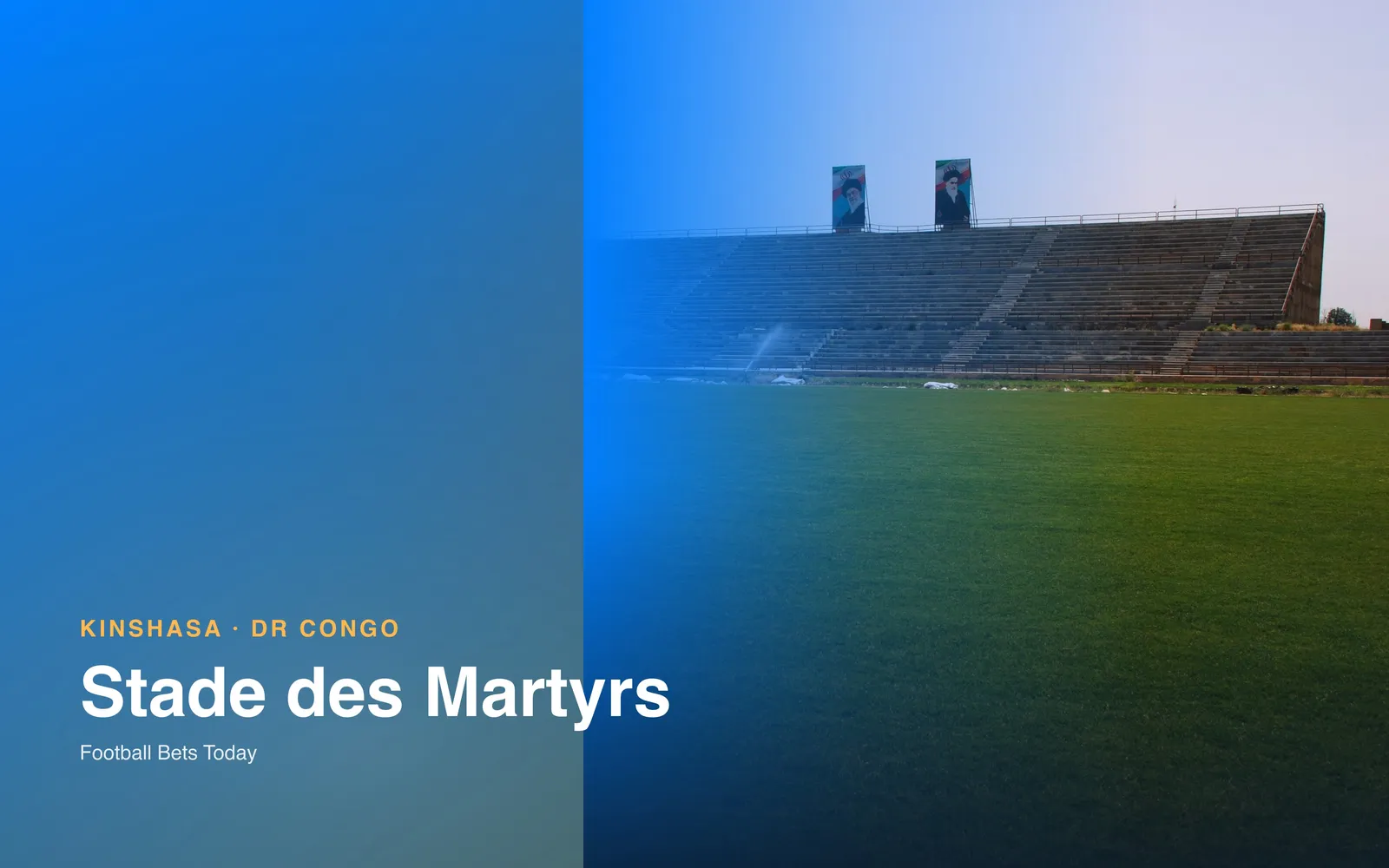
The ground
Facts
| Capacity | 80,000 |
|---|---|
| Opened | 1994 · renovated 2008 work after a FIFA suspension (reinstated 19 May 2008); rehabilitation 2020–2023 including a new pitch; CAF approved it for the 2024–25 season in July 2024 |
| Official name | Stade des Martyrs de la Pentecôte (Pentecost Martyrs Stadium); originally Stade Kamanyola (1994–1997) |
| Surface | artificial |
| Record attendance | 190,000 · Not a football match: Werrason and Wenge Musica Maison Mère concert, 4 January 2003 (no football attendance record found) (2003) |
Tenants
Who plays here
- DR Congo national football team
- AS Vita Club
- Daring Club Motema Pembe
History
Matches it is known for
- 1994: opened with a friendly, Zaire v Malawi
- 2004: DR Congo's first win over South Africa
- 2012: Francophonie summit
- 2019: funeral of Étienne Tshisekedi
- 2023: Pope Francis addressed a gathering, and the Jeux de la Francophonie were held
- 2024: Félix Tshisekedi's second-term swearing-in
In depth
About Stade des Martyrs
Key takeaways
- Stade des Martyrs is DR Congo’s national stadium, in Lingwala, Kinshasa, opened in 1994.
- The standard football capacity recorded in 2026 is 80,000; attendance at other events is a separate measure.
- The Leopards, AS Vita Club and DC Motema Pembe use the stadium.
- Its original name was Stade Kamanyola, replaced in 1997 by Stade des Martyrs de la Pentecôte.
- Historical CAF approval does not confirm that a particular forthcoming match will take place there.
Stade des Martyrs is the national stadium of DR Congo, in Lingwala, Kinshasa, with a standard capacity of 80,000 recorded in 2026. Opened in 1994, it is a home ground for the Leopards and a major venue for African football, or soccer to South African readers.
The ground has carried two names, Stade Kamanyola at its opening and Stade des Martyrs de la Pentecôte since 1997, and both belong to its place in Congolese football as home of the Leopards and the Kinshasa clubs. Understanding those names, its changing approval record and its role in the national game makes the fixture listing considerably more useful.
What Is the Football Capacity of Stade des Martyrs?
The standard football capacity is 80,000 in the stadium record consulted in 2026, making it DR Congo’s largest stadium. That figure describes the ground’s football capacity, rather than a promise about ticket availability for every fixture. Seating work, operational arrangements and the conditions attached to an individual event can affect access, so use the match information alongside the capacity figure when planning a visit.
Attendance at concerts and other events belongs in a separate column. No football record attendance is documented in the sources used. Turning an estimate from another kind of event into the ground’s football capacity would give supporters the wrong picture.
Who Plays at Stade des Martyrs?
DR Congo’s Leopards, AS Vita Club and Daring Club Motema Pembe have used the stadium as their home ground since its opening in 1994. A club’s association with the ground does not establish the venue of every home match; the fixture module supplies that detail.
Vita against DCMP gives the stadium its Kinshasa derby connection, while international fixtures bring the Leopards’ wider following into focus. For South African readers, 5 December 2004 is the defining historical marker: DR Congo recorded their first victory over Bafana Bafana here. That match gives the stadium a place in South African football memory as well as Congolese history, beyond the scale of its stands.
Why Are Kamanyola and Martyrs Names for the Same Stadium?
The ground opened as Stade Kamanyola in 1994 and became Stade des Martyrs de la Pentecôte in 1997. The later name commemorates four ministers hanged on 2 June 1966. Its English rendering is Pentecost Martyrs Stadium, while Martyrs Stadium is a shorter everyday form. Stade Kamanyola and Kamanyola Stadium therefore identify its original name, rather than another football ground elsewhere in Kinshasa.
That distinction helps when reading older match reports or speaking with supporters who retain the earlier name. The renaming belongs to the country’s public history, and the full French title carries that remembrance. When comparing football stadiums across Africa, keep the stadium’s identity separate from its approval status: a familiar name can remain unchanged while the arrangements for hosting international football change.
Why Has the Stadium’s Approval Changed?
Stade des Martyrs has moved through several periods of restricted eligibility and renewed approval, so every claim needs its date. FIFA withdrew its eligibility for World Cup and Africa Cup of Nations qualifiers in March 2008, then restored it after work in May 2008. CAF decisions followed in 2021 and 2023, before approval for the 2024 to 2025 season was reported in July 2024.
A September 2026 news report described a CAF list placing the stadium in Category 3 with an artificial pitch. That is a dated report, rather than confirmation of unrestricted availability for every subsequent competition. The live approval status module should establish the latest position and any match conditions. In French reporting, homologué means approved, huis clos means behind closed doors, and pelouse synthétique means artificial pitch.
| Date | Recorded Decision |
|---|---|
| 25 March 2008 | FIFA suspended eligibility for World Cup and Africa Cup of Nations qualifiers. |
| 19 May 2008 | FIFA restored eligibility after renovations. |
| 22 September 2021 | CAF disqualified the ground from hosting two World Cup qualifying matchdays. |
| 9 February 2023 | CAF again judged the venue unsuitable. |
| 13 July 2024 | CAF approval was reported for the 2024 to 2025 season. |
| 14 September 2026 | A CAF list, described in news coverage on 17 September, reportedly classified the ground as Category 3 with an artificial pitch. |
How Do Visiting Fans Get to Stade des Martyrs?
The destination is Stade des Martyrs in Lingwala, central Kinshasa; confirm the match venue before arranging the journey. The available evidence does not establish a dependable public transport route, fare or match shuttle, so no particular service can be recommended here. Give your accommodation or transport provider the full stadium name and commune, then check dated public notices or local news for access arrangements.
Ticket sales, entry gates and arrival instructions should come from the announcement for the specific match. Arrange the return journey beforehand, allow time for entry checks and follow steward directions if an approach or entrance changes. Large gatherings are part of this stadium’s history, so crowd safety deserves attention. Leave yourself room to move and avoid pressing towards an entrance when movement ahead has stopped.
When Was Stade des Martyrs Built?
A Chinese consortium built the stadium between 1988 and 1993, at a reported cost of about US$38 million. The project followed a memorandum signed by Zaire and China in 1987. Its opening on 14 September 1994 featured a friendly between Zaire’s Leopards and Malawi. Those dates distinguish the building period from the moment the ground began its public life as an international football venue.
Later work included renovations associated with the 2008 reinstatement. Reports in September 2026 also described seating installation during further rehabilitation. For a Kenyan reader thinking of Kasarani, or a Ugandan reader thinking of Mandela National Stadium, the useful comparison is the national ground’s role: its history continues while its facilities and hosting arrangements develop.
What Else Has Happened at Martyrs Stadium?
The stadium’s wider history includes the 2012 Francophonie summit, Pope Francis’s address on 2 February 2023 and the Jeux de la Francophonie in 2023. The Games ran from 28 July to 6 August, marking their first staging in DR Congo. These occasions explain why the ground matters beyond football: it also serves as a gathering place for cultural, religious and national events.
Its history also includes people who died while attending events. An account of the 1998 Vita against DCMP match records that four people died during the match. A crowd crush at Fally Ipupa’s concert on 29 October 2022 killed 11 people. These losses deserve plain, respectful acknowledgement, and they make careful crowd management and event specific entry information essential parts of any visitor guide.
How Can Fans Across Africa Follow Matches Here?
Use the live fixtures and results modules above to identify the competition, confirmed venue and broadcast information for each match. The Leopards have a long continental record, with Africa Cup of Nations titles in 1968 and 1974, so supporters across the continent know them well. Nigerian followers of the Super Eagles remember the 2025 play off meeting with DR Congo, while South African supporters of Bafana Bafana link the stadium to the 2004 result. Kenyan, Ghanaian and Ugandan followers of Harambee Stars, the Black Stars and the Cranes meet the Leopards in continental competition, so a draw can bring Kinshasa into their calendar.
Congolese players and TP Mazembe, winners of the CAF Champions League in 2009, 2010 and 2015, also give supporters in other countries a reason to follow DR Congo football. Read kick off times in WAT, EAT, SAST and GMT together, especially when sharing a fixture across family groups in different countries. Many supporters tend to watch on broadcast or streaming coverage, often together with friends and family, so check the individual match listing for Nigeria, Kenya, South Africa, Ghana and Uganda. Before travelling or arranging a viewing, open the fixture, compare it with the live stadium approval status and check the venue again.
FAQ
What is the capacity of Stade des Martyrs?
Its standard football capacity is 80,000, as recorded in 2026. Estimates from other kinds of events should not be treated as football capacity or a football attendance record.
Who plays at Stade des Martyrs?
The DR Congo national team, AS Vita Club and DC Motema Pembe use Stade des Martyrs, so check the venue attached to each match.
How do I get to Stade des Martyrs?
Head for Stade des Martyrs in the Lingwala commune of central Kinshasa. Confirm transport with your accommodation or provider, and check dated match access announcements before setting off. The available evidence does not establish a reliable stadium shuttle or public transport route.
When did Stade des Martyrs open?
It opened on 14 September 1994 with a friendly between Zaire’s Leopards and Malawi, after a Chinese consortium built it between 1988 and 1993.
Why is Stade des Martyrs also called Stade Kamanyola?
Stade Kamanyola was its original name at opening in 1994. It became Stade des Martyrs de la Pentecôte in 1997, in remembrance of four ministers hanged on 2 June 1966.
Written by Tunde Akinwande, 2026-11-11.