
Monaco (Fontvieille) · opened 1985
Capacity 16,360. Who plays here, the matches it is known for, and how to get there.
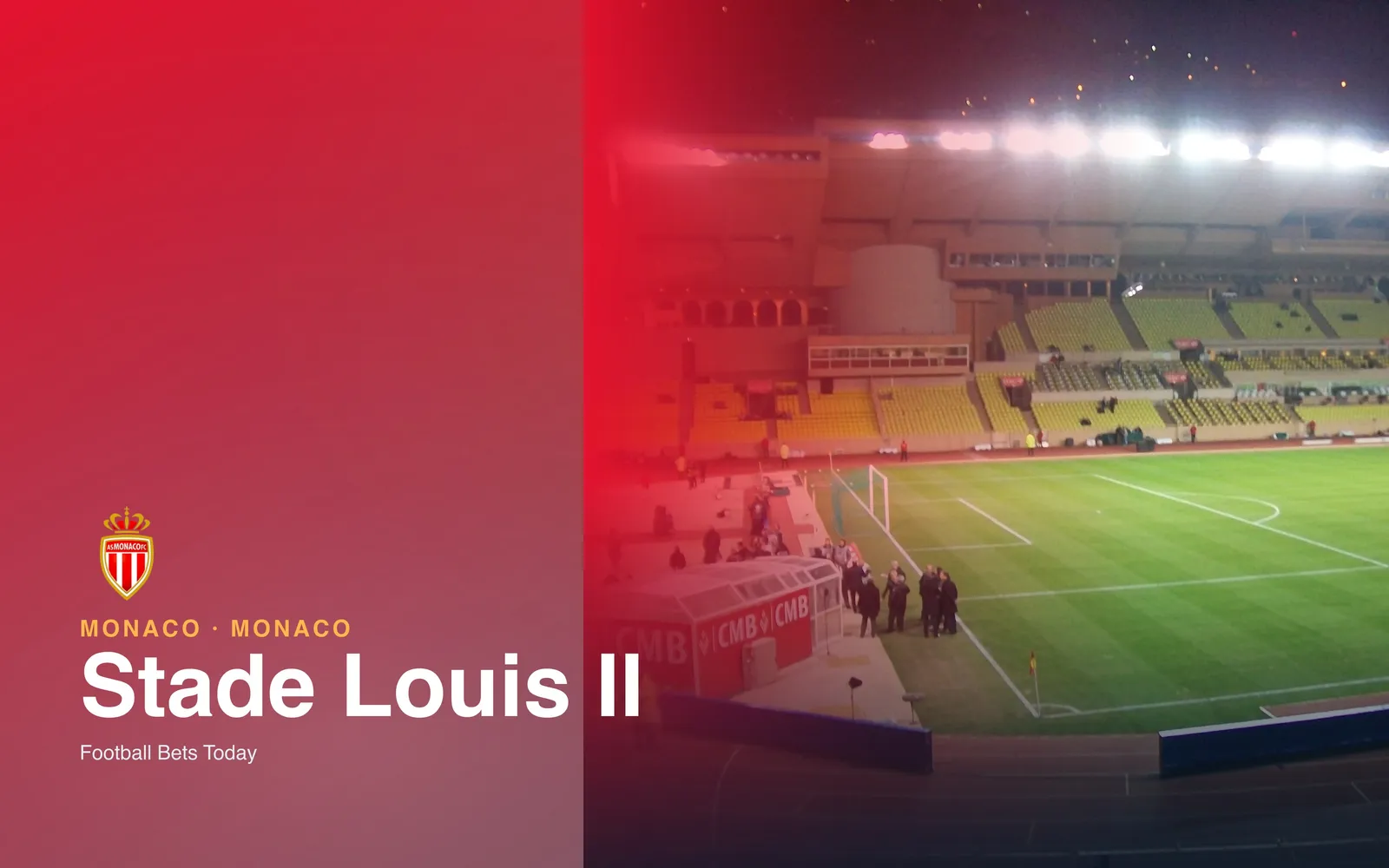
The ground
Facts
| Capacity | 16,360 |
|---|---|
| Opened | 1985 |
| Official name | Stade Louis II |
| Surface | hybrid |
| Owner | Principality of Monaco |
| Record attendance | 20,000 · AS Monaco v Sampdoria (1990) |
| Getting there | 7 avenue des Castelans, Fontvieille; local buses 4, 6 and N1, and Monaco-Monte-Carlo is the nearest mainline station. |
History
Matches it is known for
- UEFA Super Cup 1986
- UEFA Super Cup every year 1998–2012
- Herculis Diamond League athletics meeting, since 1987
- Games of the Small States of Europe 1987 and 2007
In depth
About Stade Louis II
Key takeaways
- Stade Louis II is AS Monaco’s home ground in Fontvieille, close to the French border at Cap d’Ail.
- The current capacity sits in the stadium data module; the record attendance was 20,000 against Sampdoria in 1990.
- The current stadium opened on 25 January 1985 and carries the name of Prince Louis II of Monaco.
- The nine arches at the away end make the ground easy to recognise on television.
- Cameroon and Italy played a goalless draw here on 3 March 2010.
Stade Louis II is the home ground of AS Monaco in Monaco’s Fontvieille district, hosting Ligue 1 football, known as soccer in South Africa. Its record attendance was 20,000 for Monaco against Sampdoria on 3 April 1990. The current stadium opened on 25 January 1985, and its up to date capacity is carried in the stadium data module.
The arches are the easy landmark, but the African connections give the ground another meaning. Cameroon faced Italy here in 2010, while Morocco played a tournament final here in 1988. For a visitor planning around a Monaco fixture, understanding the border and the stadium entrance matters as much as recognising the view behind the goal.
What Is the Capacity of Stade Louis II?
The current capacity of Stade Louis II appears in the stadium data module, which updates itself, so the written guide does not repeat a number that can change. Its record attendance is a fixed historical figure: 20,000 watched Monaco against Sampdoria on 3 April 1990. Those two figures describe different things, so the historical crowd should not be treated as the number of tickets available for a match. When choosing seats, use the event’s seating plan, which shows the sections offered for that particular fixture.
Who Plays at Stade Louis II?
AS Monaco have used the current Stade Louis II as their home ground since 1985, including for Ligue 1 football. The club gives the stadium its regular football identity, while the Herculis athletics meeting, held here since 1987 and part of the Diamond League, gives it another audience. Check the event name alongside the date before arranging a visit, because a stadium listing can refer to either sport.
The African link to Monaco runs through named players and national teams. Nigeria’s Victor Ikpeba won the African Footballer of the Year award in 1997 while playing for the club, which is why Nigerian supporters often follow Monaco. Liberia’s George Weah played for Monaco from 1988 to 1992, Cameroon met Italy at this ground in 2010, and Morocco reached the 1988 Tournoi de France final here. Readers in Kenya, Ghana, South Africa and Uganda follow Monaco mostly through Ligue 1 coverage and the Super Cup history. A football fixture listing should identify the competition and home side; an athletics listing needs its own programme.
How Do I Get to Stade Louis II?
Stade Louis II is at 7 avenue des Castelans in Fontvieille, near Monaco’s French border beside Cap d’Ail. Start with your arrival point, select the direction towards Fontvieille, then confirm the stop and timetable for your event date with the official transport information before setting off.
If you arrive by rail, check which station exit and onward route suit your journey, and keep the stadium address saved separately from your ticket. If you are staying around Cap d’Ail, compare the route from your accommodation directly to the ground. Crossing into Monaco need not mean travelling through the centre first.
When Did Stade Louis II Open, and Who Was Louis II?
The current Stade Louis II opened on 25 January 1985, when Prince Rainier III inaugurated the complex. It succeeded the original stadium, which opened in 1939. Construction of the replacement ran from May 1981 to 1984, so references to the stadium’s origins and its present building can carry different dates. For the ground used by Monaco today, 1985 is the opening year to remember.
Louis II was Monaco’s sovereign prince when the original stadium was built in 1939, and the replacement retained his name. The name therefore connects two grounds across different periods of the principality’s history. It does not identify a second stadium called Louis. That distinction helps when comparing older match reports with photographs of the present complex, especially when a search result gives only the shortened name.
Why Does Stade Louis II Have Nine Arches?
The nine arches at the away end are Stade Louis II’s defining architectural feature, part of the current stadium opened in 1985. They make the ground recognisable even when a television shot shows little of the surrounding district. Among football stadiums, this is a particularly useful visual signature: you can identify the setting before the camera returns to the action on the pitch.
The Fontvieille setting, with sporting and other facilities fitted into the wider complex, helps explain why a visit feels different from approaching a ground surrounded by open land. The arches are a landmark, not a gate, so look at the block and entrance named on your ticket before you walk towards them. Recognising the building and reaching your allocated section are separate parts of the journey.
Which Major Matches Put Stade Louis II on the Map?
The UEFA Super Cup gave Stade Louis II a recurring place in European football, first in 1986 and then every year from 1998 to 2012. The first appearance established its connection with the event; the later sequence made Monaco a familiar setting for the trophy match. For viewers following European football from African viewing centres and living rooms, those editions helped make the arches part of the competition’s memory.
National teams brought African stories too. France beat Morocco by two goals to one in the Tournoi de France final here on 5 February 1988. On 3 March 2010, Cameroon played out a goalless draw with Italy in a friendly. That Cameroon match is a useful reference point for African readers: the same ground associated with Monaco also hosted the Indomitable Lions.
| Year | Place in the Stadium’s History |
|---|---|
| 1986 | The stadium hosted the UEFA Super Cup. |
| 1998 to 2012 | The stadium hosted the UEFA Super Cup every year throughout this period. |
Do Louis II, Stade Louis 2 and Louis II Stadium Mean the Same Ground?
Louis II, Stade Louis 2 and Louis II Stadium are search variants for Stade Louis II in Monaco. The digit spelling replaces the Roman numeral, while the English wording adds “Stadium” to the name. When searching for directions or fixtures, include Monaco or Fontvieille to make the destination clear. For travel bookings, use the full stadium name and avenue des Castelans address together.
What Else Is Inside the Stade Louis II Complex?
The complex includes the Salle Gaston Médecin indoor arena (5,000 seats), the Prince Albert II aquatic centre and a large underground car park. These facilities help explain why the address serves more than football supporters. If your journey planner sends you only to the wider Fontvieille complex, look for the football entrance beneath the nine arches end of the ground before you commit to a gate. A car park or arena entrance is not necessarily the one shown on a football ticket.
What Are the Pitch and Football Match Day Like?
Stade Louis II has a hybrid pitch measuring 105 × 68 metres. When selecting a ticket, study the stand and block rather than relying on a photograph taken from another section. Keep your booking confirmation accessible, check the admission instructions and allow time to find your entrance. Visiting supporters should follow the ticket arrangements issued for their allocation.
How Can Fans Across Africa Follow Football From Stade Louis II?
Match times in the fixture module appear in WAT, EAT, SAST and GMT together. Use WAT in Nigeria, EAT in Kenya and Uganda, SAST in South Africa, and GMT in Ghana. Check the displayed local date as well as the hour, particularly when arranging a shared viewing. France’s seasonal clock changes make a remembered time difference an unreliable guide.
Broadcast availability belongs in the country viewing information because rights and services can change between competitions and seasons. Open the relevant fixture, confirm that Monaco are at home, then check the viewing details for your country. Nigerian viewers have a lasting reason to watch because of Victor Ikpeba’s 1997 African Footballer of the Year award at the club, and Cameroonian and Moroccan viewers can recall the national team matches played at this ground. Before travelling or arranging your viewing, check the fixture status, local start time and access details again.
FAQ
What is the capacity of Stade Louis II?
The current capacity is shown in the stadium data module on the page. The record attendance was 20,000 for Monaco against Sampdoria on 3 April 1990.
Who plays at Stade Louis II?
AS Monaco have played at the current Stade Louis II since 1985. The stadium has also hosted the Herculis athletics meeting since 1987.
How do I get to Stade Louis II?
The address is 7 avenue des Castelans in Fontvieille, near Cap d’Ail. Choose your arrival point, head towards Fontvieille and confirm the stop and timetable for your event date before travelling.
Why does Stade Louis II have nine arches?
The nine arches at the away end are the stadium’s defining architectural feature, part of the current ground opened in 1985. They make it easy to recognise on television.
What else is inside the Stade Louis II complex?
The complex includes the Salle Gaston Médecin indoor arena (5,000 seats), the Prince Albert II aquatic centre and a large underground car park.
Do Louis II, Stade Louis 2 and Louis II Stadium mean the same ground?
Yes. They are search variants for Stade Louis II in Monaco. Adding Monaco or Fontvieille to a search makes the destination clear.
Written by Tunde Akinwande, 2026-11-11.