
Rome, Italy · opened 1953
Capacity 70,634. Who plays here, the matches it is known for, and how to get there.
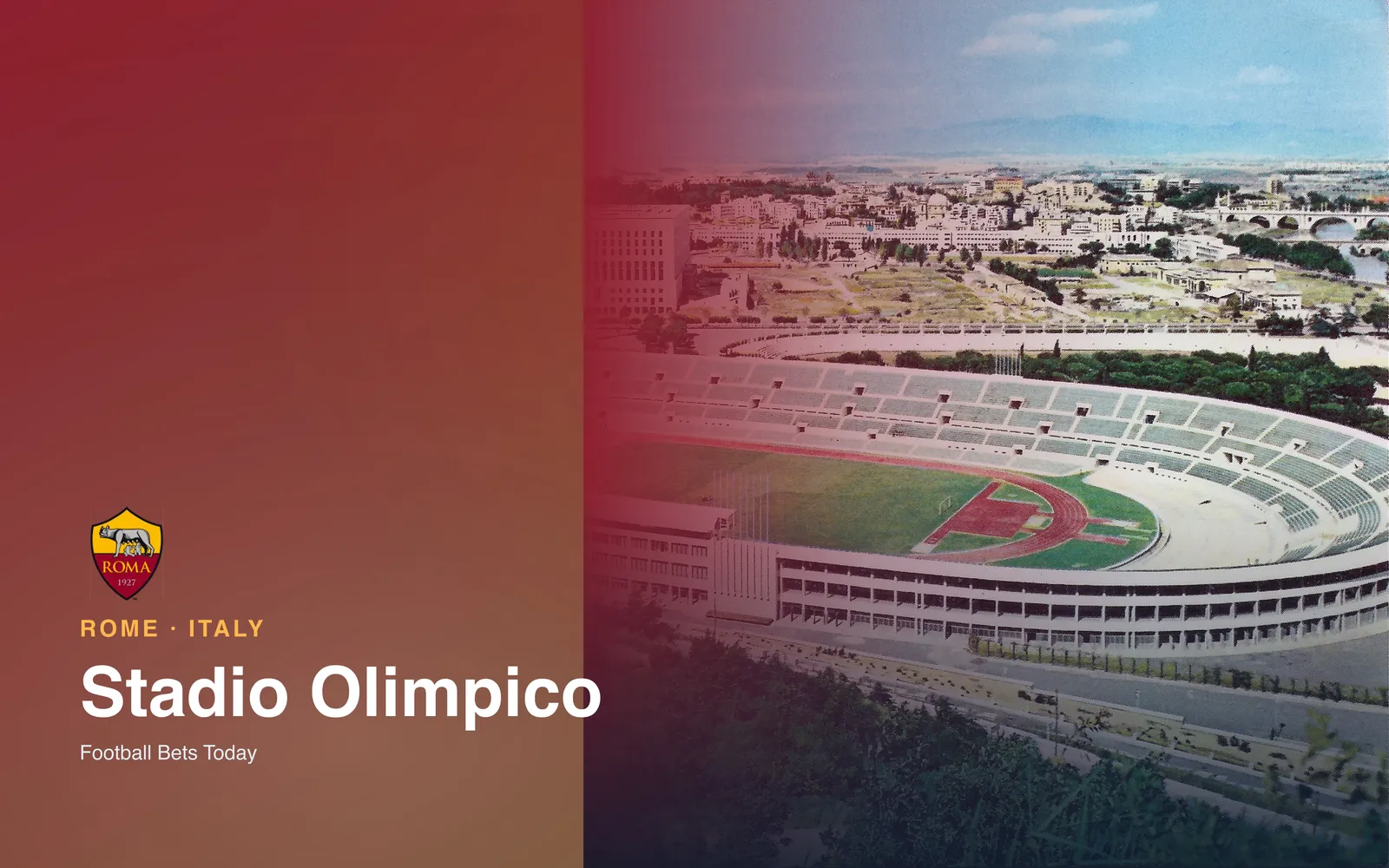
The ground
Facts
| Capacity | 70,634 |
|---|---|
| Opened | 1953 · renovated 1990 for the World Cup; 2008 |
| Official name | Stadio Olimpico (no sponsor name) |
| Surface | grass |
| Owner | Italian state, via Sport e Salute (formerly CONI) |
| Getting there | In the Foro Italico area on Viale dei Gladiatori, reached by tram and bus from Flaminio or Lepanto metro stations. The Lungotevere and the A1/GRA are the main roads. |
History
Matches it is known for
- 1960 Summer Olympics
- 1980 European Championship final
- 1990 World Cup final: West Germany 1–0 Argentina
- 2009 Champions League final: Barcelona 2–0 Manchester United
- Euro 2020 opening match: Italy 3–0 Turkey (2021)
In depth
About Stadio Olimpico
Key takeaways
- Stadio Olimpico is in Rome’s Foro Italico sports complex and is shared by Roma and Lazio.
- Its capacity following the 2007 to 2008 renovation is 70,634, second in Italy behind San Siro.
- Nigeria’s Ogenyi Onazi played for Lazio from 2012 to 2017, while Egypt’s Mohamed Salah played for Roma from 2015 to 2017.
- Ethiopia’s Abebe Bikila won the 1960 Olympic marathon in Rome, finishing at the Arch of Constantine rather than inside the stadium.
Stadio Olimpico is Rome’s national stadium, located in the Foro Italico sports complex in the north west of the city and used by Italy’s national football team. Its capacity following the 2007 to 2008 renovation is 70,634, and Roma and Lazio share it for club football, or soccer for readers in South Africa.
Sharing an address does not mean sharing an identity. For viewers in Nigeria, Ghana and Kenya, a 20:45 evening kick off in Rome in winter is 20:45 in Lagos, 19:45 in Accra and 22:45 in Nairobi, so following Roma and Lazio starts with reading the clock correctly. The Olimpico changes its colours and atmosphere with the home team, while its international history reaches from the Rome Olympics to the World Cup final. For African readers, that story also includes Ethiopia’s Abebe Bikila and the African players who have worn the colours of both clubs.
What Is the Capacity of Stadio Olimpico?
Stadio Olimpico holds 70,634 spectators following its renovation in 2007 to 2008, placing it second among Italian stadiums after San Siro. About 70,600 is a useful rounded answer, although the precise figure belongs beside its renovation date. Capacity describes the ground’s size; it does not establish how many seats will be available for a particular match, so use the event’s seating information when planning a visit.
The record attendance is 78,886 for Lazio against Foggia on 12 May 1974. The record was set in 1974, before the later renovations. When comparing football stadiums, keep those measurements separate: capacity describes a stated arrangement of the ground, while record attendance describes the crowd recorded at one particular event.
Who Plays at Stadio Olimpico?
AS Roma and Lazio share Stadio Olimpico, with both clubs using it for home matches since 1953. Italy’s national football team has also played there since 1953, while the Italy rugby union team has played there since 1954. Calling it the Italy national team stadium is understandable, provided that does not suggest every Italian home football international takes place in Rome.
African players have given both clubs a following across the continent. Nigeria’s Ogenyi Onazi played for Lazio from 2012 to 2017, which gives Nigerian readers a natural link to the Biancoceleste side of the city. Egypt’s Mohamed Salah played for Roma from 2015 to 2017 and Ivory Coast’s Gervinho from 2013 to 2016, which draws Egyptian and Ivorian followers to Roma. Club squads change, so the lineup and squad modules should establish who is involved in a particular fixture. Readers in Ghana, Kenya, Uganda and South Africa share in the wider African interest in Italian football.
Which Major Finals Have Been Played at the Olimpico?
The Olimpico hosted the 1960 Olympic opening ceremony and athletics, the 1990 World Cup final and several European club finals. West Germany beat Argentina in the 1990 final. Liverpool defeated Borussia Mönchengladbach in the 1977 European Cup final, then beat Roma on penalties in the 1984 final. That second match gives the ground a particularly personal place in Roma’s European memory: the biggest club occasion came to their own home.
Juventus won the 1996 European final against Ajax on penalties, and Barcelona defeated Manchester United in the 2009 Champions League final. The opening match of Euro 2020 also took place here, with Italy beating Turkey on 11 June 2021 after the tournament’s postponement. For a reader searching Champions League final Rome, those separate years matter, because the same stadium holds several very different football memories.
What Makes the Rome Derby Different?
The Rome derby, called the Derby della Capitale, brings Roma and Lazio together inside their shared stadium. Because the home side changes from one fixture to the next, the same ground carries a different identity depending on which club is hosting.
For African readers, the derby is also a meeting of two clubs with African connections: Onazi at Lazio from 2012 to 2017, and Salah and Gervinho at Roma in the years given above. For a visitor, the practical point is to establish which club is the designated home side before making arrangements, especially for Roma vs Lazio.
How Do I Get to Stadio Olimpico?
Reach Stadio Olimpico by planning a public transport journey to the Foro Italico area, followed by a walk to your allocated entrance. Tram 2 is a route to investigate, alongside bus services listed for the surrounding area: 32, 69, 168, 188, 200, 226, 280, 301, 446, 628, 910 and 911. These are planning leads rather than a promise of service; check the public transport authority’s journey information for your travel date.
Allow time for the final walk, entry checks and finding your section, rather than treating arrival at the nearest stop as arrival at your seat. Follow the gate shown on your match admission information, since a large stadium can require a substantial walk around its perimeter. Ticket availability and admission arrangements depend on the event, so establish the home team, seating section and entrance before setting off.
Is Olimpico the Same as Olympic Stadium Rome?
Olimpico, Stadio Olimpico Rome and Olympic Stadium Rome all refer to this ground when the context is the Italian capital. Adding Rome to a search is therefore useful when checking directions or comparing football stadiums, particularly when a fixture listing uses only the shortened name.
The ground opened on 17 May 1953 with Italy against Hungary, before taking its Olympic place in the Rome Games of 1960. It was rebuilt and roofed between 1988 and 1990 for the World Cup, with the north and south stands moved closer to the pitch. Further upgrades followed in 2007 to 2008. Those stages explain why its Olympic identity and football history sit together in the same building.
What Does the Olimpico Mean for African Sport?
The strongest African connection to the Rome Olympics is Abebe Bikila’s barefoot marathon victory for Ethiopia on 10 September 1960. There is an important distinction in the geography: the race finished at the Arch of Constantine, not inside Stadio Olimpico. The stadium hosted the opening ceremony and athletics, while Bikila’s achievement unfolded on Rome’s roads. Keeping those locations clear gives the achievement its proper setting.
Inside the Olimpico, an athletics track surrounds a grass football pitch measuring 105 × 68 metres. When choosing a viewing position, check the section plan for your event and weigh it against the atmosphere you want. A television close up and a seat in the stands offer different ways of reading the same match.
How Do Fans Across Africa Follow Olimpico Matches?
Readers in Lagos, Nairobi, Johannesburg, Accra and Kampala should check the localised kick off time before planning their viewing. Italy changes between winter and summer time, while the African time zones used here keep the same offsets throughout the year. The comparison below uses an illustrative evening start in Rome; it is a conversion guide, not an announcement of a scheduled match.
Use the fixtures module to identify the competition and date, then consult the country viewing information for the relevant broadcast listing. Roma and Lazio home games share a venue, but their domestic and European fixtures can carry different viewing arrangements. Before travelling or settling down to watch, check the match date and displayed time zone together, especially around the periods when Italy changes its clocks.
| Rome Clock | Nigeria, WAT | Kenya and Uganda, EAT | South Africa, SAST | Ghana, GMT |
|---|---|---|---|---|
| Winter, CET | 20:45 | 22:45 | 21:45 | 19:45 |
| Summer, CEST | 19:45 | 21:45 | 20:45 | 18:45 |
FAQ
What is the capacity of Stadio Olimpico?
Stadio Olimpico’s capacity following the 2007 to 2008 renovation is 70,634. It is Italy’s second largest stadium after San Siro. Its historical attendance record is 78,886 for Lazio against Foggia on 12 May 1974.
Who plays at Stadio Olimpico?
Roma and Lazio share Stadio Olimpico for club football. Italy’s national football team also uses the ground, and the Italy rugby union team has played there since 1954.
How do I get to Stadio Olimpico?
Plan a tram or bus journey to the Foro Italico area, followed by a walk to your entrance. Check current public transport routes and event travel information before departure. Leave enough time to reach the gate printed on your admission information.
Is Stadio Olimpico the same as Olympic Stadium Rome?
Yes. Olimpico, Stadio Olimpico Rome and Olympic Stadium Rome all refer to the same ground in the Italian capital. Adding Rome to a search helps when a listing uses only the shortened name.
Which major finals have been played at Stadio Olimpico?
The ground hosted the 1990 World Cup final, won by West Germany against Argentina, and European Cup finals in 1977 and 1984. It also staged the 1996 European final and the 2009 Champions League final, plus the opening match of Euro 2020.
What time is a Rome evening kick off in Nigeria, Kenya, South Africa and Ghana?
For a 20:45 start in Rome in winter, it is 20:45 in Nigeria (WAT), 22:45 in Kenya and Uganda (EAT), 21:45 in South Africa (SAST) and 19:45 in Ghana (GMT). In summer, each of those times is one hour earlier.
Written by Tunde Akinwande, 2026-11-11.